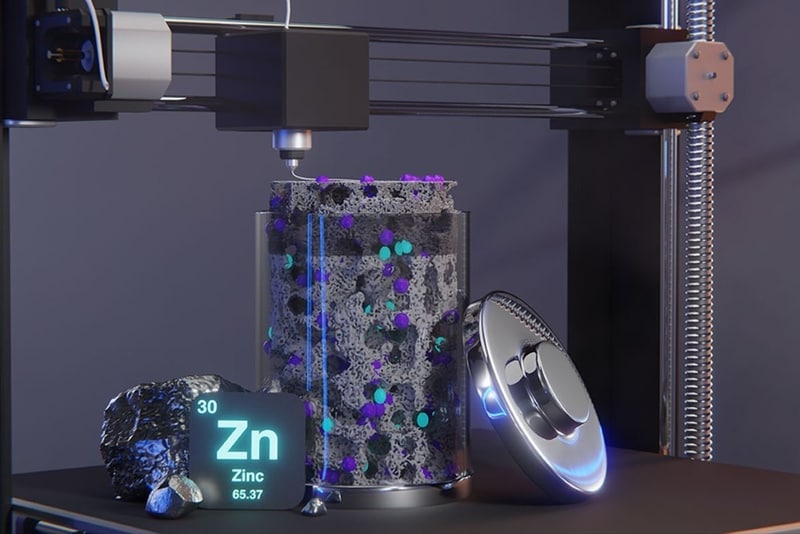
3D-printed energy storage is advancing next-generation battery development by combining additive manufacturing with zinc-ion chemistry to improve capacity and durability. Researchers at UCLA developed a hybrid zinc-ion battery featuring a 3D-printed porous carbon electrode that stores more than seven times the energy of comparable devices while maintaining strong performance over 1,500 charge cycles. The team also introduced a low-cost, 3D-printed test cell that provides more consistent and reliable battery performance measurements, making experimental results easier to reproduce across research laboratories.
This approach demonstrates how 3D printing can accelerate the development of advanced energy storage technologies while reducing manufacturing complexity and testing costs. Using abundant, recyclable zinc instead of lithium also supports more affordable and resilient supply chains for grid-scale storage. As renewable energy deployment continues to grow, scalable battery designs and standardized testing methods could help speed commercialization, improve system reliability and expand access to cost-effective long-duration energy storage.
Image Credit: Maher El-Kady/UCLA
Why This Trend Is Growing
- 3d-printed Batteries
- Additive manufacturing enables customized electrode architectures that improve energy density, durability and production efficiency for emerging storage systems.
- Zinc-ion Storage
- Abundant and recyclable zinc chemistry creates potential for lower-cost alternatives to lithium-based batteries in grid-scale and long-duration applications.
- Standardized Battery Testing
- Low-cost reproducible test cells reduce measurement variability, helping laboratories compare performance data more reliably and accelerate commercialization pathways.
Industries Being Reshaped
- Energy Storage
- Advanced electrode designs and alternative chemistries are reshaping how utilities and developers evaluate scalable storage for renewable power integration.
- Additive Manufacturing
- 3D printing is expanding beyond prototyping into functional energy components where material control and structural precision can redefine manufacturing economics.
- Renewable Energy
- More affordable long-duration batteries strengthen renewable deployment by improving grid reliability, storage accessibility and supply chain resilience.