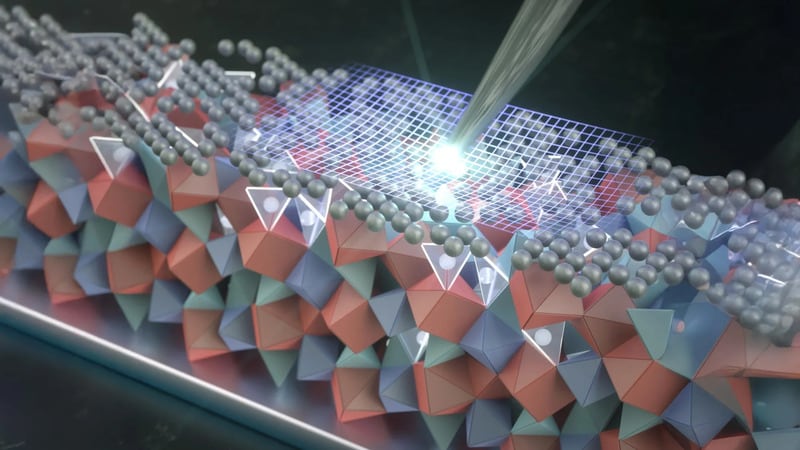
Stanford researchers introduced a nanoscale silver treatment for LLZO electrolytes designed to make future solid-state lithium metal batteries more durable. By heat-treating an ultrathin silver layer on the ceramic surface, the team significantly reduced cracking that typically undermines solid-state cells during charging. The approach targets the brittle electrolyte interface where microscopic flaws often emerge and expand over time.
The process used a dissolved, positively charged silver ion (Ag+) rather than conventional metallic silver, allowing the ions to substitute for lithium atoms within the crystal structure. A coating just 3 nanometers thick, heated to 300 °C, modified the surface to a depth of 20–50 nanometers while keeping silver in its ionic form. Mechanical tests inside a scanning electron microscope showed the treated LLZO required nearly 5 times more pressure to fracture compared to untreated samples.
For consumers, tougher solid electrolytes could help unlock safer, higher-energy batteries that tolerate fast charging without rapid degradation. The silver-ion “doping” concept also signals a broader materials trend, where ultrathin surface engineering is used to tune ceramic behavior instead of demanding defect-free manufacturing. As the team scales tests to full cells and explores other ions like copper, this method may inform next-generation designs across both lithium- and sodium-based battery platforms.
Image Credit: Science Daily
What Makes This Trend Stand Out
- Ultrathin Surface Engineering
- This trend focuses on manipulating surface properties at the nanoscale to enhance material durability without requiring perfect materials.
- Silver-ion Doping
- Incorporating silver ions in battery components is emerging as a technique to improve structural integrity and resilience during charging cycles.
- Advanced Solid-state Batteries
- Innovations in solid-state battery design aim to achieve safer, more efficient energy storage solutions by addressing traditional electrolyte limitations.
Sectors Adopting This
- Battery Manufacturing
- The industry is poised for transformation as silver-ion coatings promise to enhance performance and longevity of solid-state batteries.
- Materials Engineering
- Emerging techniques in nanoscale adjustments are redefining materials engineering by offering novel ways to improve mechanical properties.
- Consumer Electronics
- Developments in battery durability and safety are set to drive innovations in consumer electronics, enabling faster charging and longer-lasting devices.