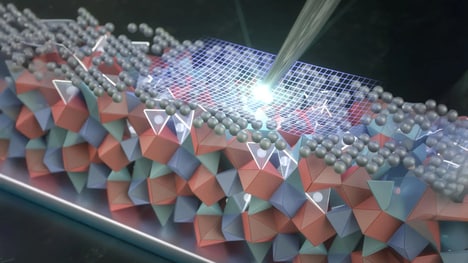
Scientists at the Hong Kong University of Science and Technology have developed a new quasi-solid-state electrolyte using redox-active covalent organic frameworks (COFs) that could make calcium-ion batteries a practical reality. The porous, carbonyl-rich structure of these COFs allows calcium ions to move efficiently along aligned molecular pathways, solving the sluggish ion transport that has long kept this battery chemistry on the sidelines. In lab tests, the resulting cell delivered a reversible specific capacity of 155.9 mAh/g and retained 74.6% of its capacity after 1,000 cycles.
Calcium is roughly 2,500 times more abundant than lithium, and the HKUST battery avoids cobalt and other contested materials entirely. The research, conducted in collaboration with Shanghai Jiao Tong University, was published in Advanced Science and represents a meaningful step toward energy storage that isn't tied to finite or geopolitically sensitive supply chains — a compelling proposition as grid-scale renewable storage continues to scale.
Image Credit: Natural News
What's Driving This Trend
- Quasi-solid-state Electrolytes
- The emergence of quasi-solid-state electrolytes presents pathways for safer, high-energy batteries that reduce flammability and enable longer cycle life in large-format cells.
- Abundant-metal Battery Chemistries
- Shifting to calcium and other earth-abundant ions offers the potential to decouple battery manufacturing from scarce or geopolitically constrained materials, lowering cost and supply risk.
- Cof-enabled Ion Transport
- Redox-active covalent organic frameworks with aligned molecular channels could dramatically improve sluggish multivalent ion mobility, enabling competitive performance for alternative-ion batteries.
Who This Affects Most
- Grid-scale Energy Storage
- Long-duration storage systems could benefit from low-cost, cobalt-free calcium batteries that leverage high abundance materials to provide economical seasonal and renewable firming capacity.
- Electric Vehicle Manufacturing
- Automotive powertrains could see novel battery pack designs if calcium-based cells achieve comparable energy density with improved material sustainability and thermal stability.
- Battery Materials Supply Chain
- Suppliers and recyclers might be restructured around abundant, non-critical feedstocks as demand shifts away from lithium-cobalt dependency toward calcium-compatible precursors and COF components.