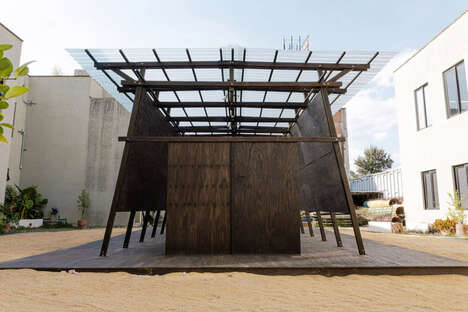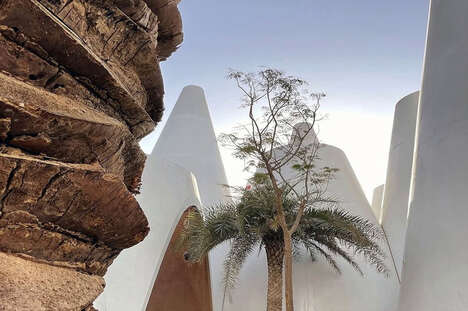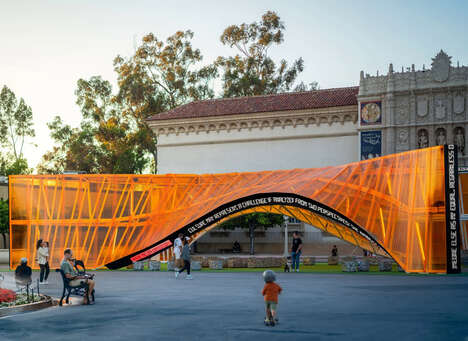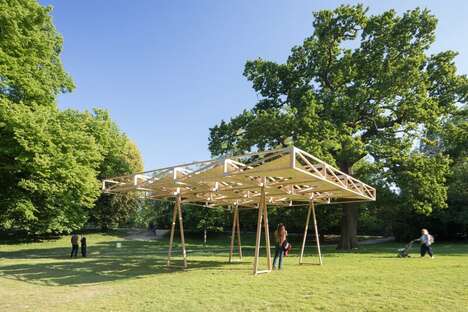

For the construction of this pavilion in Mexico City, Zaha Hadid Architects collaborated with ETH Zurich and produced an exceptionally detailed structure with a 3D knitting technique. Thanks to digital fabrication, the creatives knitted two miles of yarn, transported it to the site and hung the textile "from a wooden frame using a tension cable-net system." The silhouette of the 'KnitCandela' is concrete and boasts a beautifully fluid double curve. The interior is vibrantly engaging, while the exterior maintains a clean aesthetic.
For the construction of the strikingly chromatic pavilion, Zaha Hadid Architects and ETH Zurich utilized a very new 3D knitting technique. Dubbed KnitCrete, this approach to assembly allows for creatives to form "curving concrete structures, without the need for expensive and time-consuming molds."
What's Driving This Trend
- 3D Knitting Technique
- The use of 3D knitting technique allows for the creation of intricate and detailed structures without the need for expensive molds.
- Digital Fabrication
- Digital fabrication enables creatives to produce and transport large-scale knitted structures more efficiently.
- Chromatic Pavilions
- The use of vibrant and multicolored knitted pavilions creates visually striking and engaging architectural designs.
Who This Affects Most
- Architecture
- The architecture industry can explore the incorporation of 3D knitting techniques to create unique and cost-effective structures.
- Construction
- The construction industry can leverage digital fabrication technologies to streamline the production and transportation of large-scale knitted structures.
- Design
- The design industry can experiment with vibrant and multicolored knitted pavilions to create visually captivating and innovative structures.