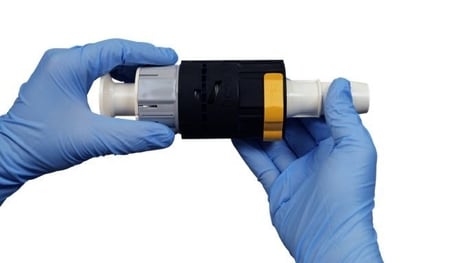
3D-printed catheter manufacturing is helping TE Connectivity automate the production of complex components used in minimally invasive medical devices. Developed at the company’s PROPELUS Prototype Center in Galway, Ireland, the process applies polymer sections with different flexibility characteristics directly onto catheter shafts during production. This replaces a predominantly manual, higher-cost assembly process while maintaining the mechanical properties, materials and appearance associated with traditionally manufactured catheter shafts. The automated approach also supports greater consistency and faster production of sophisticated components.
For medical device manufacturers, automating catheter shaft production could reduce labor requirements, manufacturing costs and variability while supporting more efficient scaling. The technology also demonstrates how 3D printing can move beyond medical prototyping into repeatable component manufacturing. As minimally invasive devices become more complex, automated production methods could help suppliers respond faster to customer requirements while maintaining the precision and consistency required for medical applications.
Image Credit: TE Connectivity
What Makes This Trend Stand Out
- Automated Catheter Production
- Robotic and additive workflows are reshaping catheter assembly by reducing manual variability while enabling scalable production of increasingly complex minimally invasive device components.
- Functional Polymer Printing
- Multi-material polymer deposition introduces new possibilities for embedding variable flexibility, performance zones and tailored mechanical properties directly into medical device structures.
- Additive Manufacturing at Scale
- The shift from prototyping to repeatable component production signals a broader opportunity for 3D printing to become a cost-efficient manufacturing platform in regulated markets.
Sectors Adopting This
- Medical Devices
- Device manufacturers gain access to more consistent, lower-cost production methods that support faster development of sophisticated tools for minimally invasive procedures.
- Healthcare Manufacturing
- Precision automation in regulated production environments creates potential for higher throughput, reduced labor dependence and improved quality control across specialized healthcare components.
- Polymer Engineering
- Advanced material formulation and deposition techniques open pathways for customized flexibility, durability and biocompatibility in next-generation medical and industrial products.