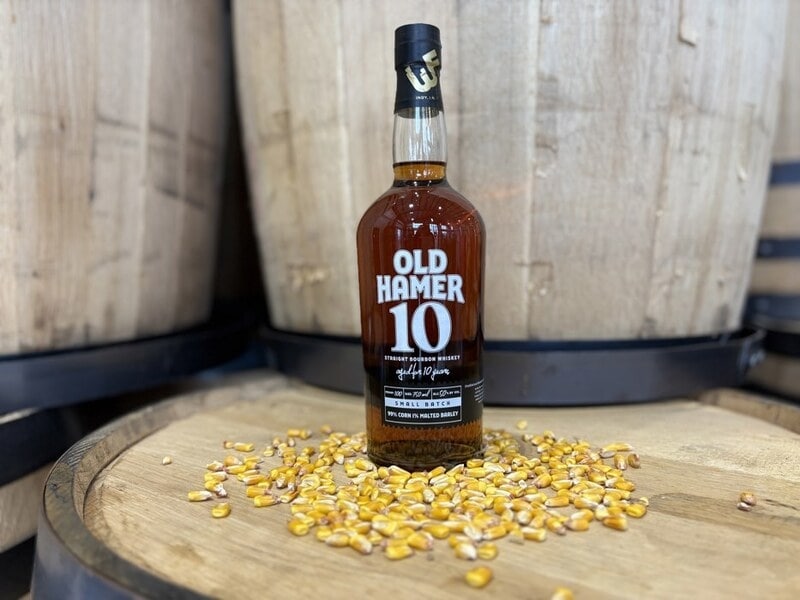
West Fork Whiskey Co. has introduced a significant addition to its portfolio with the Old Hamer 10-Year Bourbon. The Indiana-distilled spirit stands out for its unconventional 99% corn mash bill. This composition figures as a deliberate nod to pre-Prohibition Hoosier whiskey traditions and results in a distinctly sweet flavor profile that differentiates it from mainstream bourbons.
The extended aging process provides depth and smoothness typically sought after in premium bourbons, while the high corn content creates a uniquely sweet foundation uncommon in contemporary offerings. Bottled at 100 proof after a decade in new charred American oak, West Fork Whiskey Co.'s Old Hamer 10-Year Bourbon offers layered tasting notes ranging from initial bubble gum and caramel aromas to developing flavors of vanilla, mint, and toasted oak.
Image Credit: West Fork Whiskey Co.
Why This Trend Is Growing
- Revival of Pre-prohibition Whiskey Recipes
- An opportunity arises for distillers to explore historical whiskey recipes, offering unique taste profiles that deviate from modern norms.
- High-corn Content Spirits
- The use of unconventional mash bills, like the 99% corn mash in bourbon, opens avenues for spirits that boast distinct sweetness and unique flavors.
- Extended Aged Bourbons
- Crafting bourbons with longer aging processes can appeal to consumers seeking deeper complexity and smoother finishes.
Industries Being Reshaped
- Craft Distilleries
- Small-scale operations focusing on unique mash bills and aged spirits can distinguish themselves in a saturated spirits market.
- Luxury Spirits
- Premium aging and distinctive flavor profiles provide high-end spirits brands with differentiation potential in the competitive luxury goods sector.
- Agricultural Innovation
- Innovative mash bill compositions highlight corn varieties' potential, which can drive demand for diverse agricultural inputs and practices.