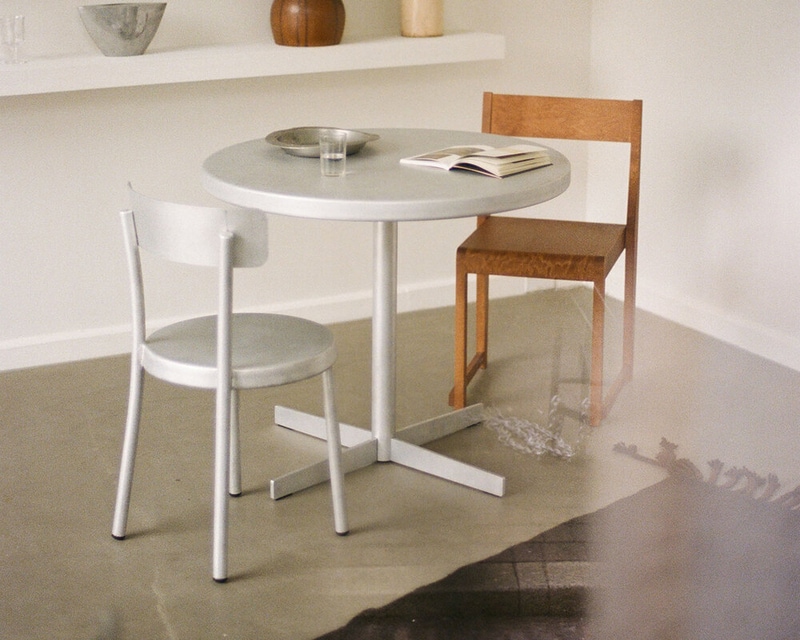
The Tasca Table by FRAMA is a circular aluminum table defined by its hand-finished surface and sculptural base. Danish brand FRAMA uses untreated aluminum to emphasize natural variation, allowing the material to retain visible texture and tonal shifts. The design features a round tabletop supported by intersecting elements and a cylindrical leg, forming a stable structure with a clear geometric profile. The surface is left raw rather than polished, highlighting the physical qualities of the metal.
The table is part of a wider FRAMA series focused on aluminum furniture, where material consistency is applied across multiple pieces. Its lightweight construction supports both indoor and outdoor use, while the untreated finish allows the surface to change gradually with wear. The Tasca Table is produced using aluminum selected for durability and recyclability, aligning with the material approach used throughout the collection.
Image Credit: FRAMA
Why This Trend Is Growing
- Raw Metal Aesthetics
- Exposed, hand-finished aluminum surfaces that visibly age create scope for designs that value evolving material character over uniform finishes.
- Lightweight Indoor-outdoor Furniture
- A focus on durable, low-weight aluminum pieces expands possibilities for versatile furnishings that transition seamlessly between interior and exterior settings.
- Material-consistent Collections
- Series-level consistency in material and finish encourages product ecosystems where modular or complementary items share a coherent tactile and tonal identity.
Industries Being Reshaped
- Premium Furniture Manufacturing
- High-end producers can integrate hand-finishing and recyclable aluminum selection to differentiate products through tangible craftsmanship and sustainable sourcing.
- Hospitality and Contract Design
- Hotels and restaurants benefit from robust, aging-friendly aluminum furnishings that maintain aesthetic appeal under heavy use and varying climates.
- Architectural Interior Design
- Interior specifiers are positioned to employ untreated metal elements as enduring surface treatments that contribute to a building's material narrative.