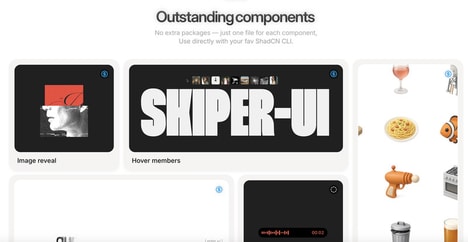

Koval UI is a React component library designed around a browser-first, minimalistic approach. Unlike traditional libraries that add abstraction layers, Koval UI emphasizes leveraging native browser capabilities to deliver highly performant, lightweight components.
This approach aims to improve rendering speed, reduce overhead, and simplify integration across projects. The library is suitable for a wide range of applications, including rapid prototyping, AI-driven interfaces, and large-scale enterprise systems, where efficiency and scalability are critical. From a business perspective, tools like Koval UI reflect the increasing demand for development frameworks that optimize performance while minimizing complexity. By focusing on native behaviors and modular design, the library enables teams to accelerate front-end development, maintain consistency across applications, and reduce maintenance costs, supporting both experimental and production-grade projects efficiently.
Image Credit: Koval UI
Why This Trend Is Growing
- Browser-first Minimalism
- A shift toward leveraging native browser features over abstraction layers enables substantially smaller bundles and faster initial render times for diverse web applications.
- Native-behavior Components
- Growing preference for components that adhere to built-in browser semantics reduces cross-browser inconsistency and simplifies accessibility compliance across projects.
- Performance-optimized Lightweight Libraries
- Increased demand for libraries that minimize runtime overhead drives opportunities for frameworks focused on low-latency interactions and resource-constrained environments.
Industries Being Reshaped
- Enterprise Software
- Large organizations stand to benefit from reduced maintenance costs and improved scalability when adopting modular, browser-first component systems across complex internal platforms.
- AI-driven Product Design
- Models and interfaces that prioritize fast, predictable rendering support richer real-time AI experiences and smoother human-AI interaction flows.
- Front-end Tooling & Devops
- Toolchains optimized for minimal bundles and native behaviors can redefine CI/CD practices by shortening build times and simplifying dependency management.