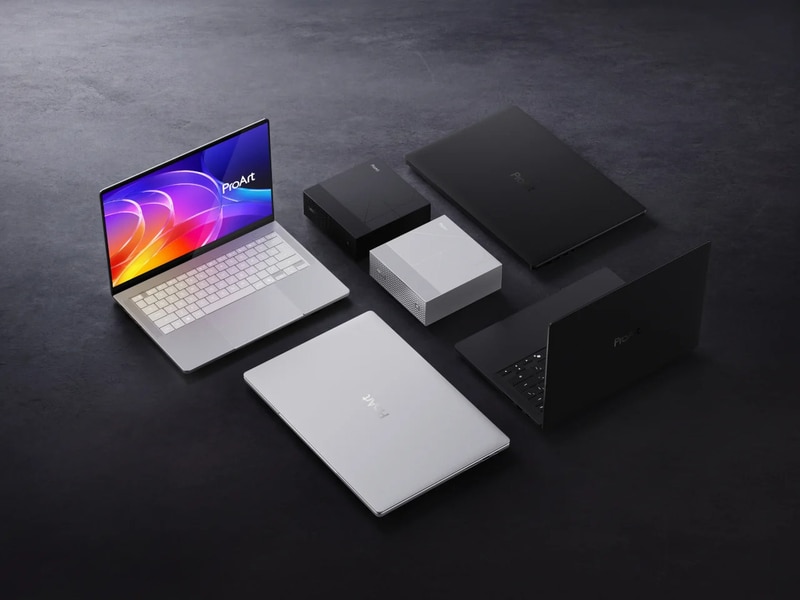
The ProArt P16, ProArt P14, and ProArt Mini PC are new creator-focused computers introduced by ASUS at Computex 2026. The ProArt series uses NVIDIA’s RTX Spark platform, which combines a Grace CPU, Blackwell RTX graphics, and up to 128GB of unified memory. ASUS developed the lineup for demanding creative workloads including video editing, 3D rendering, AI image generation, and local AI model processing. The laptops feature ASUS Lumina Pro OLED displays with Pantone-validated color accuracy, HDR support, and high refresh rates for professional creative work.
The RTX Spark platform delivers up to one petaflop of AI computing performance and supports tasks that traditionally required larger workstation systems. ASUS highlights workflows including 12K video editing, large-scale 3D scenes, AI video generation, and local language model deployment.
Image Credit: ASUS
What Makes This Trend Stand Out
- On-device Petaflop AI
- Local petaflop-class AI performance reduces dependence on remote data centers and enables high-throughput generative and real-time inference workflows with lower latency and data transfer overhead.
- Unified Memory Architectures
- Large pools of unified memory up to 128GB simplify dataset handling and model passing between CPU and GPU, making complex, memory-bound creative tasks more tractable on single systems.
- Creator-focused Mobile Workstations
- Thin-and-light laptops with workstation-level GPUs and color-accurate OLED displays compress traditional studio capabilities into portable form factors, changing expectations for where professional content can be produced.
Sectors Adopting This
- Film and Video Production
- Access to 12K editing and local AI video generation on portable machines shifts post-production pipelines toward more iterative, on-location content creation that reduces turnaround times.
- 3D Animation and VFX
- Support for large-scale 3D scenes and high-memory workloads on a single system enables more artists to handle complex simulations and rendering tasks without farm-level resources.
- AI Software and Model Deployment
- Local deployment of language and image models on unified CPU–GPU platforms creates opportunities for privacy-focused, offline AI services and bespoke model tuning at the edge.