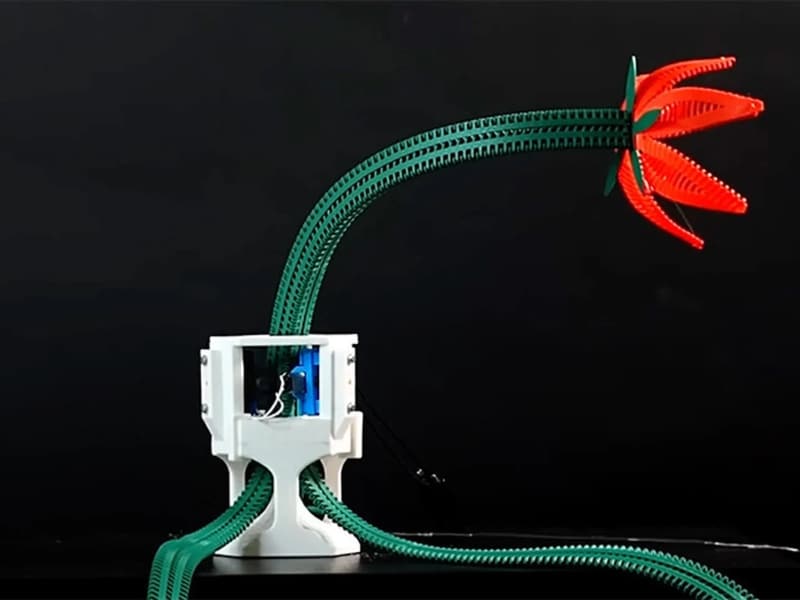
The Y-Zipper is a three-sided fastener developed by researchers at MIT's Computer Science and Artificial Intelligence Laboratory. The Y-Zipper uses three flexible strips that zip together to form a rigid triangular beam. Unzipping the structure returns it to a flexible state. The concept originated with electrical engineer Bill Freeman, who patented a three-sided zipper design in 1985. The CSAIL team expanded the idea with a 3D-printable system and software that allows users to customize the structure before fabrication.
Users can adjust strip length, bend angle, and motion type through the design software. Available configurations include straight, arched, coiled, and twisted forms. The system produces structures that can switch between flexible and load-bearing states without manual assembly. Researchers have demonstrated potential uses in camping equipment, medical devices, robotic systems, and deployable structures.
Image Credit: MIT Computer Science and Artificial Intelligence Laboratory
What Makes This Trend Stand Out
- Transformable Material Systems
- Enables materials that alternate between flexible and rigid states to support multifunctional products with reduced weight and storage footprint.
- Digital-to-physical Fabrication
- Offers customizable software-driven design pipelines that translate user-defined geometries into printable, reconfigurable hardware components.
- Reconfigurable Structural Components
- Creates modular beams and shells that can be rapidly deployed or collapsed, supporting adaptable architecture and transportable load-bearing solutions.
Sectors Adopting This
- Outdoor Equipment
- Proposes compact, transformable shelters and gear that shift from packable flexibility to rigid support for quick setup and resilience in the field.
- Medical Devices
- Introduces implants and assistive devices that can be inserted or positioned in a compliant state and then transitioned to a supportive configuration in situ.
- Robotics-and Automation
- Supports robots with limbs or structures that change stiffness on demand, enabling safer human interaction and adaptable manipulation tasks.