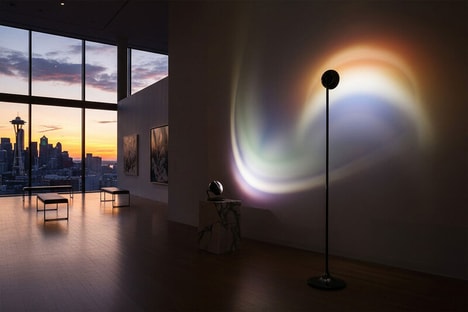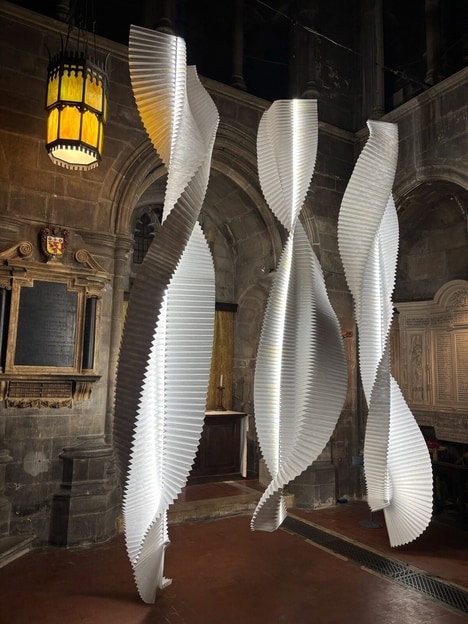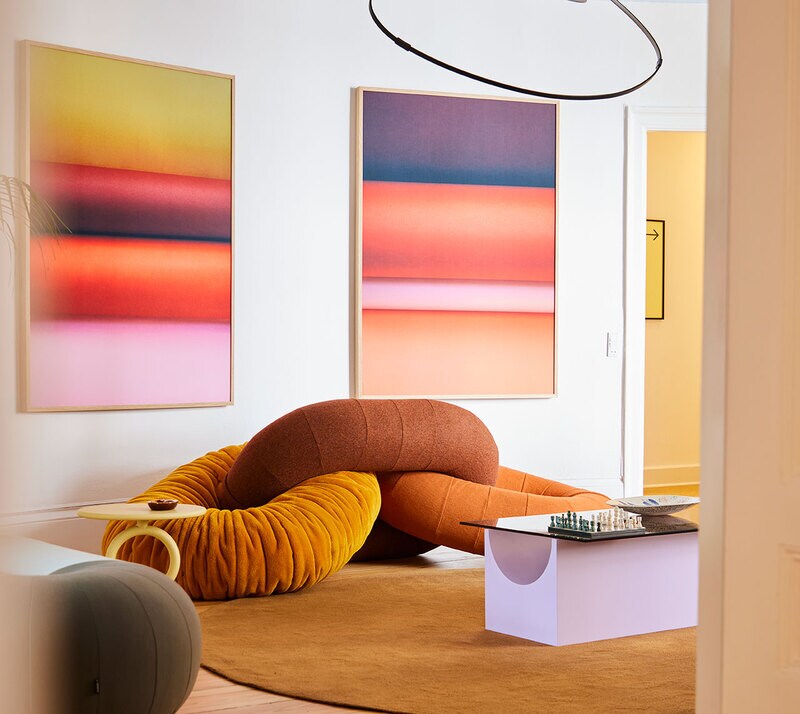
The Paper Curves collection by design studio Raw Color transforms simple loops of paper into sculptural landscapes through photography and precise lighting. Sheets are hand-curved into rhythmic forms, then captured as two-dimensional prints that reveal depth, shadow, and dynamic gradations. The work highlights how subtle shifts in angle and hue can create entirely different moods, turning paper into immersive abstract environments.
Raw Color merges analog craftsmanship with digital output, blending color theory and physical materiality into each composition. This practice reflects their broader ethos of using color as both emotional driver and design tool, allowing light to reveal hidden textures and forms. The resulting visuals feel both engineered and spontaneous—a balance of intuition and structure that encourages quiet reflection. Paper Curves invites viewers to reconsider the mundane, finding delight in the gradient between form, shadow, and light.
Image Credit: Raw Color
What Makes This Trend Stand Out
- Analog-digital Hybrid Art
- The fusion of analog craftsmanship and digital outputs in artworks presents new avenues for creating immersive visual experiences that challenge traditional art forms.
- Dimensional Photography
- Innovative photographic techniques that capture depth and dynamic gradients offer a fresh perspective on visual storytelling, transforming simple materials into complex narratives.
- Color Theory Application
- Advanced application of color theory in design projects opens up opportunities for creating emotionally resonant environments through the strategic use of light and hue.
Sectors Adopting This
- Photography
- The exploration of dimensional and gradient photography introduces novel techniques that can redefine artistic expression and commercial imagery.
- Design
- Integrating analog processes with digital enhancements within design offers a groundbreaking approach to crafting unique aesthetic pieces.
- Visual Art
- Innovations in transforming everyday materials through creative techniques highlight potential for disruptive trends in contemporary visual art.