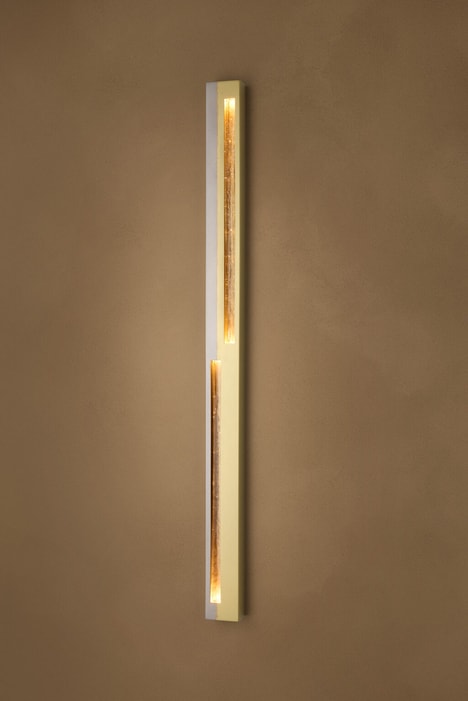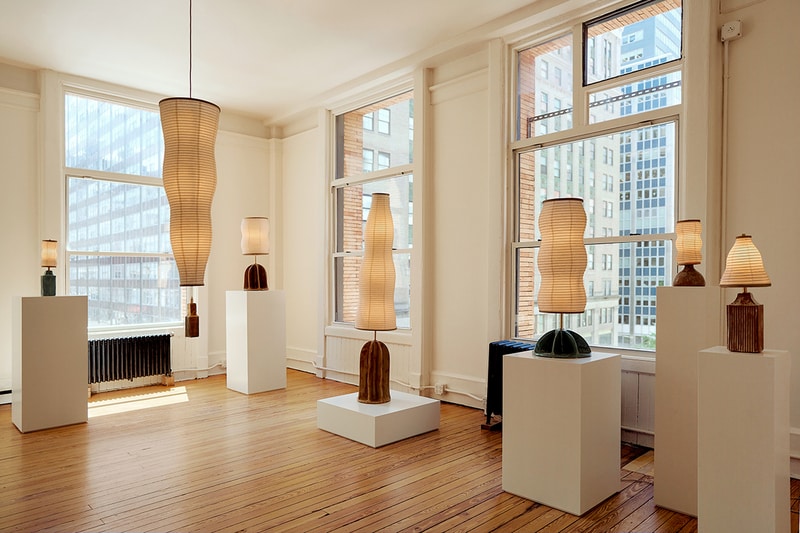
Kawabi and Christopher Merchant have collaborated on the Amica Collection, a series of pendant lights, sconces, and table lamps presented by Assembly Line during New York Design Week. The collection combines Christopher Merchant’s extruded ceramic forms with handmade paper components developed through Kawabi’s papermaking process. Ribbed paper shades wrap around the lighting structures, while rounded ceramic sections introduce textured surfaces and sculptural profiles throughout the series.
The collection includes multiple lighting configurations with layered translucent paper surfaces that diffuse illumination across the fixtures. Ceramic components feature earthy finishes, carved detailing, and vertically ribbed forms repeated throughout the collection. Assembly Line presented the collaboration within its Manhattan gallery and showroom space during the annual design event. The Amica Collection debuted during New York Design Week 2026 at Assembly Line in Manhattan.
Image Credit: NYCxDesign
Why This Trend Is Growing
- Hybrid Material Lighting
- Combining extruded ceramics with handmade paper introduces material pairings that enable lightweight, sculptural fixtures with new aesthetic and functional combinations of opacity and form.
- Textured Diffuse Illumination
- Layered ribbed paper surfaces paired with carved ceramic elements create novel ways to diffuse light, producing customizable ambiances and tactile visual depth within a single fixture.
- Artisanal Industrial Collaboration
- Cross-disciplinary partnerships between craft papermakers and precision ceramic producers open pathways for scalable handcrafted products that retain artisanal uniqueness at higher production volumes.
Industries Being Reshaped
- Lighting Design
- Design firms and manufacturers can rethink fixture typologies by integrating porous, translucent materials that alter lumen distribution while emphasizing sculptural presence.
- Interior Architecture
- Spatial planners and architects may adopt textured, low-glare lighting elements as architectural components that simultaneously define zones and modulate daylight-matching illumination.
- Hospitality and Boutique Hotels
- Curated accommodations could leverage handcrafted hybrid fixtures to differentiate guest experiences through tactile lighting that conveys locality and craft provenance.