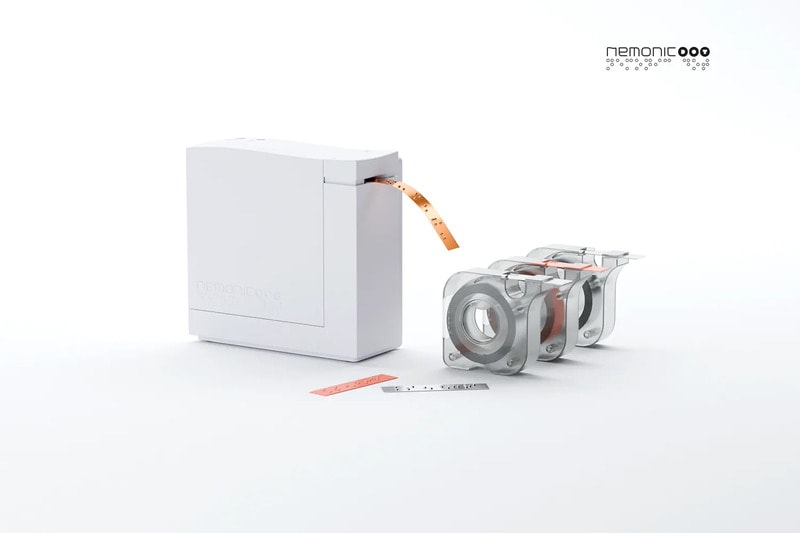
Nemonic Dot brings on-demand, high-fidelity Braille labeling to anyone, anywhere by combining portable hardware with an AI-enhanced app.
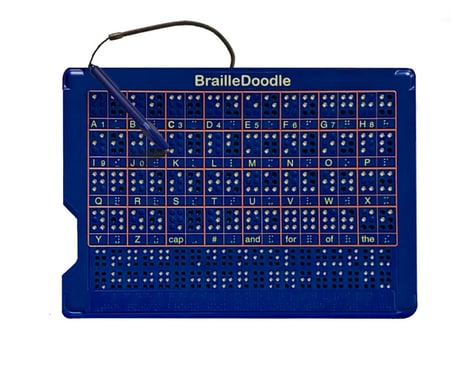
People with vision impairment still lack access to everyday information because of the clarity or unavailability of Braille, or how difficult it is for non-experts to produce. This leaves essential items, from medications to equipment, unlabeled or inconsistently marked, creating daily uncertainty and limiting independence. Nemonic Dot closes these gaps by combining a portable Braille label printer and a mobile app. The first-of-its-kind mobile printer is a CES 2026 Innovation Awards Honoree in Mobile Devices, Accessories & Apps that creates uniform, standard-compliant Braille dots, embosses on metal, converts voice or text from more than 100 languages into 6- or 8-dot Braille, and integrates with existing systems, like pharmacy software.
Why This Trend Is Growing
- AI-enhanced Accessibility Tools
- The integration of AI in accessibility tools, like Nemonic Dot's app, is revolutionizing how assistive technology is personalized and made more effective for users with vision impairments.
- Portable Assistive Devices
- The demand for highly mobile and user-friendly assistive devices is on the rise, exemplified by the Nemonic Dot's portable Braille printer that empowers users with greater independence.
- Multilingual Braille Transcription
- Innovations in multilingual Braille transcription, converting text from over 100 languages, are enabling more comprehensive global accessibility solutions for the visually impaired.
Industries Being Reshaped
- Assistive Technology
- Advancements such as on-demand Braille label printers illustrate potential leaps in the assistive technology sector, focusing on more inclusive and accessible information dissemination.
- Healthcare Accessibility
- Devices that integrate with pharmacy systems to provide Braille labeling are pivotal in the healthcare accessibility industry, enhancing safety and reliability for patients with visual impairments.
- Mobile Device Innovation
- The rise of uniquely portable gadgets, like the handheld Braille printer, signifies a transformation within the mobile device industry as it expands into specialized, accessibility-driven innovations.