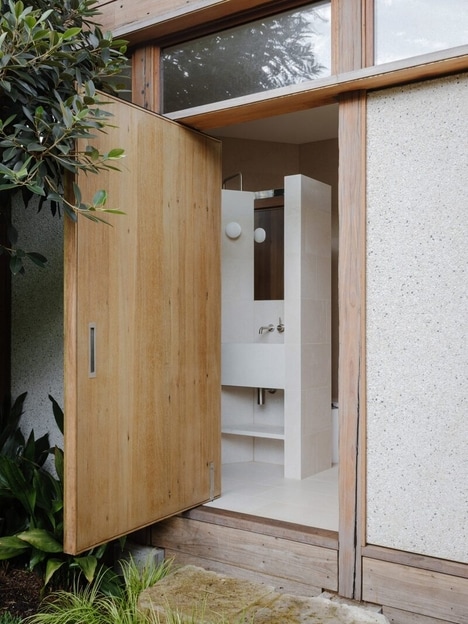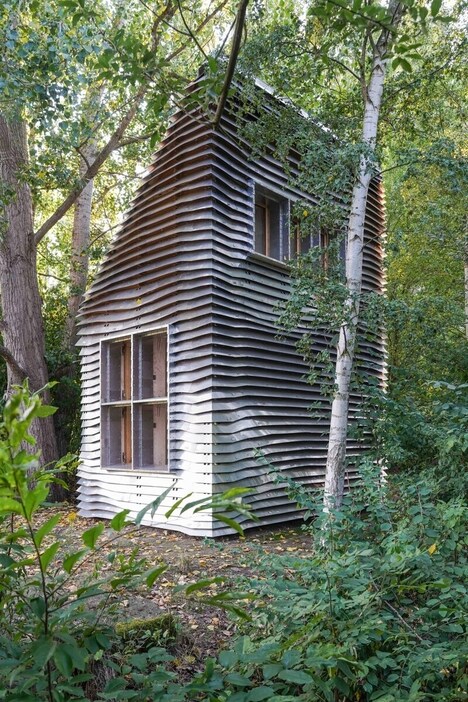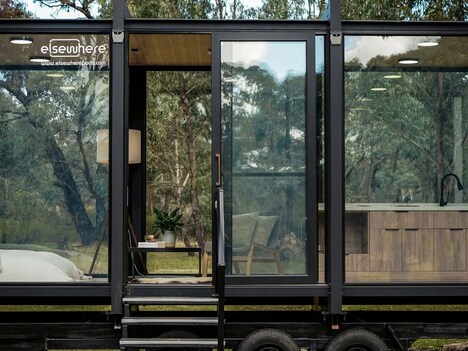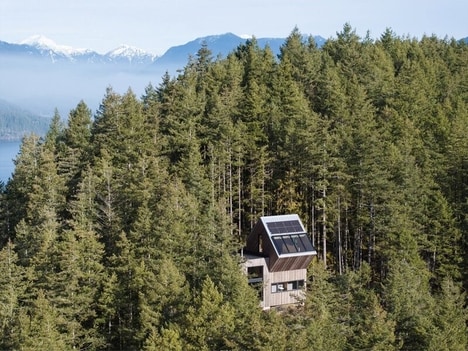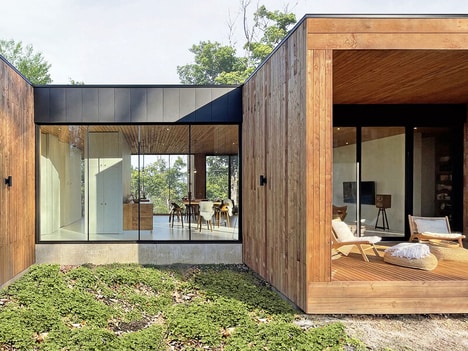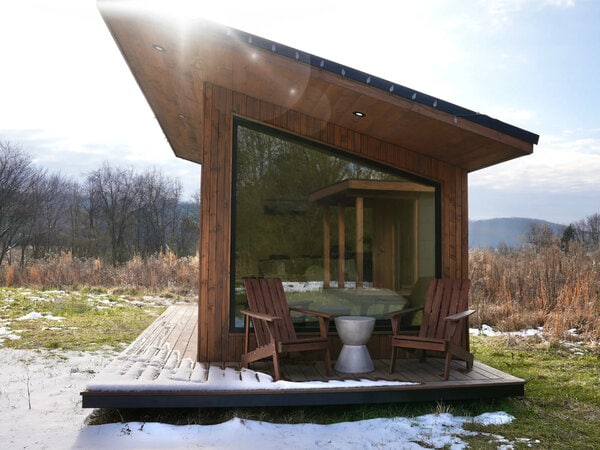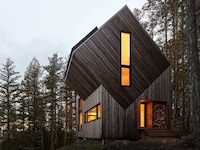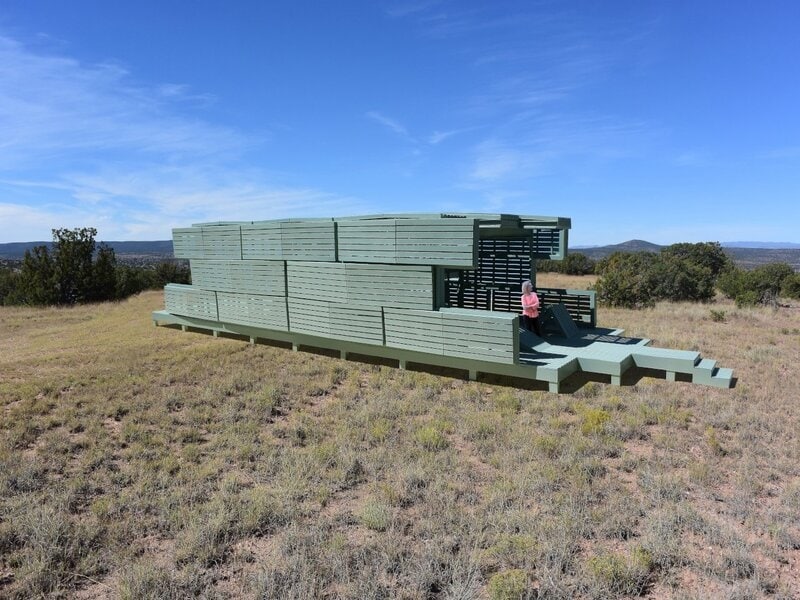
This modular off‑grid retreat is designed to embrace its natural surroundings by transforming its form. With expandable walls that slide open or closed, the structure intelligently adapts to shifting seasons and climate needs. Inside, the living space remains open and light-filled when deployed, while the compact core contains essentials like a kitchenette, bath, and workspace. Reclaimed timber cladding and a green roof integrate the home into forests or meadows, making it feel part of the landscape rather than imposed upon it. The house is solar-powered, equipped with rainwater collection and composting sanitation—enabling independent living without sacrificing comfort.
Outdoor living is deeply considered. A wraparound deck extends into the landscape, turning each configuration into a unique vantage point or gathering space. Each sightline is carefully composed, framing sky, trees, or water depending on the retreat’s site. With its blend of customizable architecture and self-sufficient systems, the retreat shows that environmentally sensitive living doesn’t have to compromise design or experience.
Image Credit: Micheal Jantzen
Why This Trend Is Growing
- Expandable Architecture
- The innovation of expandable architecture allows structures to dynamically adapt their form to changing environmental conditions, offering new possibilities for sustainable building designs.
- Self-sufficient Living
- Advancements in self-sufficient living technology integrate solar power, rainwater collection, and composting systems to create homes that minimize environmental impact while maintaining modern conveniences.
- Nature-integrated Design
- Nature-integrated design employs natural materials and landscapes to seamlessly blend buildings with their surroundings, reducing ecological disruption and enhancing aesthetic appeal.
Industries Being Reshaped
- Modular Housing
- The modular housing industry is transforming traditional construction by allowing homes to adapt their structures easily to varying climates and terrains, promoting flexibility and sustainability.
- Renewable Energy Solutions
- Renewable energy solutions industry is revolutionized by integrating solar and alternative energy technologies to power off-grid living spaces, ensuring environmental resilience.
- Eco-friendly Construction Materials
- The eco-friendly construction materials industry is advancing by sourcing sustainable inputs like reclaimed timber, which support environmental conservation and appeal to green consumers.