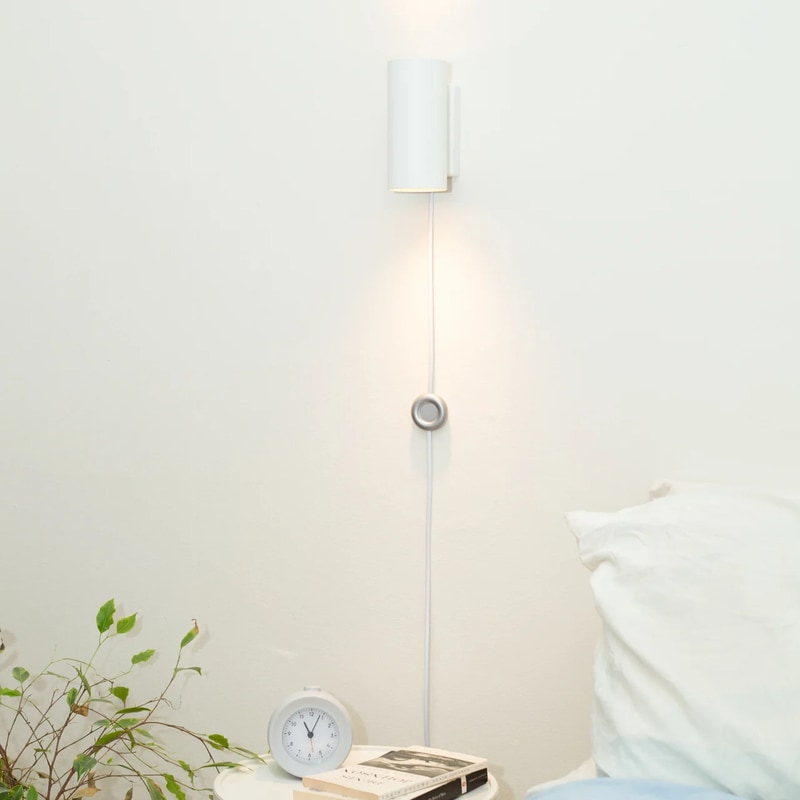
The Modal Inline Switch was designed by Andrew King as a premium alternative to conventional plastic inline lamp switches. The component is CNC-machined from aluminum with a bead-blasted anodized finish, replacing the lightweight injection-molded construction commonly found on floor and table lamps. Developed through multiple design iterations, the switch adopts a circular form that is comfortable to press by hand or nudge with a foot. The button mechanism was also refined with a guided button cap system to improve stability and tactile feedback during operation.
The switch features a mechanically assembled housing that can be disassembled for repair instead of relying on permanent adhesives. Its heavier aluminum construction provides a more substantial feel while maintaining the same on-off function as standard inline switches. Earlier prototypes explored angular forms before the final rounded profile was selected to improve usability and ergonomics.
Image Credit: Andrew King
What's Driving This Trend
- Premium Utility Hardware
- Everyday electrical components are being elevated through durable materials and refined finishes, creating room for functional objects to carry design-led value beyond their basic purpose.
- Repairable Product Design
- Mechanically assembled housings and serviceable parts reflect growing demand for products that extend lifespan while reducing reliance on disposable, adhesive-bound construction.
- Tactile Interface Refinement
- Improved button stability, weight, and ergonomic shaping highlight how small interaction points can differentiate familiar products through more satisfying physical feedback.
Who This Affects Most
- Lighting
- Lamp accessories can shift from low-cost commodity parts to premium design elements that complement higher-end home and workspace lighting systems.
- Consumer Electronics
- Material upgrades and modular construction in simple control components suggest opportunities for longer-lasting, more repair-friendly device interfaces.
- Home Furnishings
- Design-conscious hardware integrated into household objects can enhance perceived quality across furniture, decor, and residential utility products.