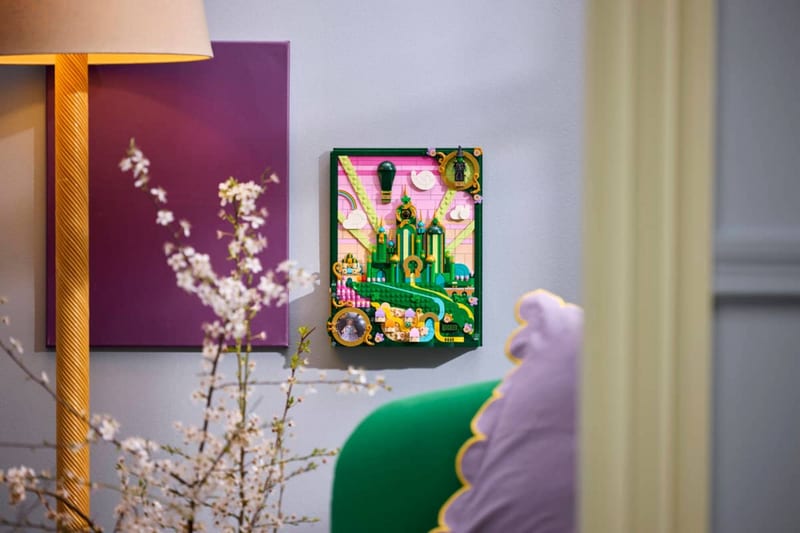
The Lego Emerald City set is a wall-mounted Lego model based on the Emerald City from The Wizard of Oz, designed to be built and displayed vertically rather than as a traditional horizontal playset. The set is composed of interlocking plastic bricks configured to depict key architectural features of the Emerald City, including tall spires, stepped platforms and decorative motifs drawn from the source material. Once assembled, the model can be secured to a vertical surface via integrated hanging elements or placed on a flat surface leaning against a wall.
The set includes a range of Lego minifigures representing characters associated with the Oz story, along with small accessories and decorative pieces that attach to the main build. Colour placement and brick selection aim to evoke the vibrant green and gold palette traditionally associated with the Emerald City. Instructions and numbered bags are provided to guide the building sequence. The wall-oriented configuration distinguishes the set from traditional Lego building kits by prioritising vertical form and display visibility.
Image Credit: LEGO
What's Driving This Trend
- Vertical Display Models
- A move toward wall-oriented builds transforms collectible models into framed artworks that prioritize sightline, spatial economy and curatorial presentation.
- Nostalgia-driven Decorative Toys
- Designs that repurpose beloved IP into adult-focused display pieces leverage emotional resonance to blur the line between toy and home décor.
- Modular Wall-mounted Decor
- Interlocking, reconfigurable elements enable customizable wall installations that can evolve with changing tastes and spatial constraints.
Who This Affects Most
- Toy and Hobby Retail
- Retailers are seeing demand for premium, display-ready kits that command higher margins and extend the purchase lifecycle beyond play.
- Interior Design and Home Decor
- Design professionals are integrating collectible constructions as focal accents that combine personal storytelling with spatial design.
- Licensing and Entertainment Merchandise
- Entertainment brands are monetizing legacy IP through limited-run, display-centric products that appeal to adult collectors and fans.