
General Intuition introduced a foundation model for embodied AI trained on millions of hours of video game data, enabling spatial-temporal reasoning that can transfer from virtual environments to physical robots. The startup developed the model to learn movement and action patterns from controller inputs, positioning it as a general-purpose platform for robotics rather than a system tailored to a single machine or environment.
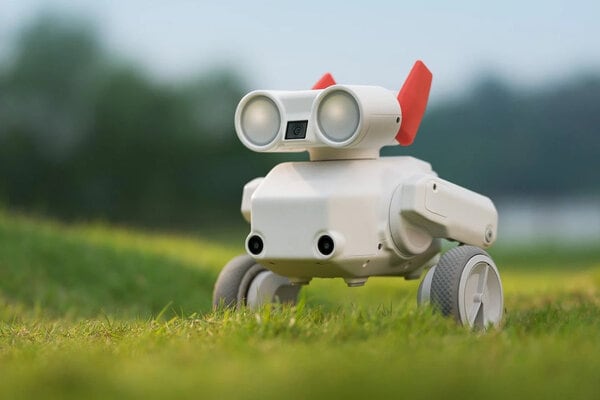
The company demonstrated that the model could play video games for extended periods and, after being fine-tuned with just eight minutes of real-world robotics data, power a quadrupedal robot using only a front-facing camera. Backed by a recent US$320 million funding round, General Intuition aims to provide a foundation model that robotics companies can adapt for their own applications, reducing reliance on extensive real-world training datasets.
For robotics developers, the platform could significantly shorten development cycles by making general-purpose physical AI easier to deploy across different machines. The launch reflects a broader shift toward foundation models that prioritize adaptability and transfer learning over building specialized AI systems for individual robotic applications.
Image Credit: General Intuition
Why This Trend Is Growing
- Game-trained Robotics
- Video game data becomes a scalable proxy for real-world experience, creating new pathways for robots that learn movement, timing, and navigation before entering physical environments.
- Transferable Embodied AI
- Foundation models with spatial-temporal reasoning allow robotics platforms to adapt across machines and settings, reducing dependence on custom-built intelligence for each use case.
- Low-data Robot Fine-tuning
- Minimal real-world training requirements shift robotics development toward faster iteration cycles and broader deployment potential in environments where data collection is costly or complex.
Industries Being Reshaped
- Robotics
- General-purpose AI models expand the robotics market by enabling developers to deploy adaptable systems across quadrupeds, manipulators, drones, and autonomous machines.
- Video Gaming
- Interactive game environments gain strategic value as training grounds for physical AI, linking entertainment data assets with industrial automation and machine intelligence.
- Artificial Intelligence
- Embodied foundation models extend AI beyond language and vision into action-based reasoning, opening new commercial territory for platforms that connect virtual learning with real-world autonomy.