Skild AI introduced 'Skild Brain,' a unified robotics foundation model designed to act as a general-purpose control system for many types of robots. Developed by the Pittsburgh-based startup, the software aims to function as a single artificial brain featuring an “omni-bodied” approach that is not tied to a specific robot design. Rather than being limited to one hardware format, Skild Brain is built to interface with quadrupeds, humanoids, robotic arms, and mobile manipulators.
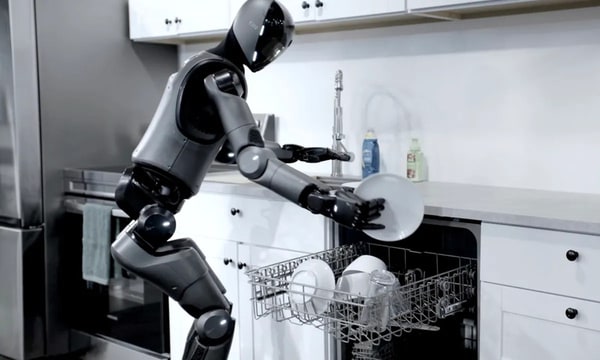
The model was trained using online videos of humans completing tasks alongside large-scale physical simulations spanning thousands of robot form factors. This training approach, which the company refers to as in-context learning, enables robots to perform activities from routine household chores, like loading a dishwasher, to navigating challenging environments such as slippery terrain. Skild AI highlighted that Skild Brain can adapt in real time to unfamiliar robots or changing conditions.
Moreover, the model’s ability to generalize across hardware platforms supports a trend toward scalable robot deployments, where one intelligence layer serves many machines.
Image Credit: Shutterstock / Anton Vierietin
What's Driving This Trend
- Unified Robotics Control Systems
- The development of unified robotics control systems reveals a trend in creating versatile software that can operate across various robot types, offering flexibility and scalability in robotics applications.
- Omni-bodied Approach in Robotics
- The shift towards an 'omni-bodied' approach in robotics highlights the potential for control systems to operate independently of specific physical robot designs, promoting cross-platform integration.
- In-context Machine Learning
- Utilizing in-context machine learning, Skild AI demonstrates a trend in training robots through expansive simulations and human task observation, enabling them to perform complex tasks in diverse environments.
Who This Affects Most
- Robotics and Automation
- The robotics and automation industry is poised for disruptive growth through the adoption of control systems capable of managing diverse robot designs and tasks, enhancing operational efficiency.
- Artificial Intelligence Software
- Advancements in AI software are transforming industries by enabling flexible solutions like Skild Brain, which can seamlessly adapt across various hardware platforms and tasks.
- Smart Home Technology
- Integration of adaptable robotics control systems into smart home technology represents a shift towards multifunctional domestic robots capable of managing household chores more effectively.