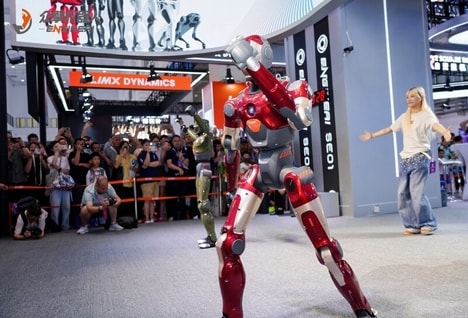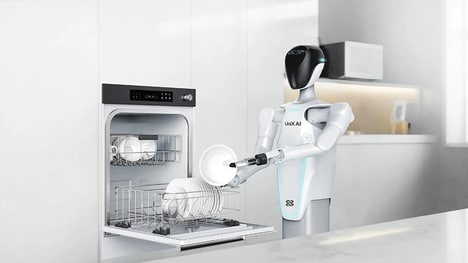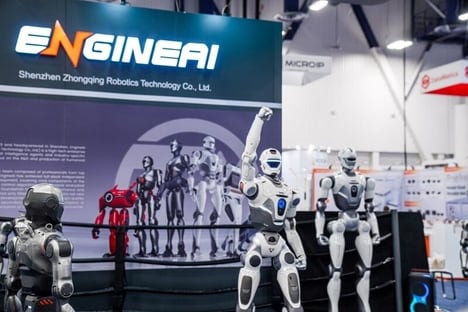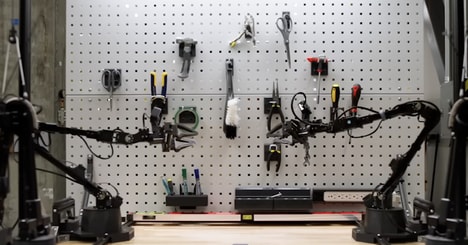

General-purpose AI robots are redefining robotics by combining advanced reasoning with adaptable hardware capable of working across multiple environments. Genesis AI's Eno pairs the company's GENE foundation model with a mobile platform and dexterous robotic hands, enabling it to understand high-level objectives, plan multi-step workflows, and adapt to changing conditions. Unlike traditional robots that perform fixed tasks, Eno is designed to function as an autonomous physical agent in manufacturing, logistics, laboratories, hospitals, hotels, and eventually homes. An optional cognitive display also makes its reasoning and operational status visible to nearby users, encouraging more transparent human-robot collaboration.
For businesses, this signals growing demand for flexible robotic platforms that can be deployed across diverse workflows instead of purpose-built automation systems. Organizations can reduce infrastructure complexity, improve operational efficiency, and scale automation more easily while supporting employees with intelligent robotic assistants capable of handling increasingly sophisticated physical tasks.
Image Credit: Genesis AI
What Makes This Trend Stand Out
- Agentic Robotics
- Autonomous machines with reasoning capabilities are creating new possibilities for flexible physical agents that interpret objectives, plan workflows, and adapt across unpredictable business environments.
- Transparent Human-robot Collaboration
- Visible reasoning interfaces are expanding trust in robotic systems by making machine intent, task status, and operational decisions more understandable to nearby workers.
- Multi-environment Automation
- Adaptable robotic platforms are reducing dependence on single-purpose machinery, enabling automation models that move more fluidly between factories, warehouses, labs, hotels, hospitals, and homes.
Sectors Adopting This
- Manufacturing
- Factories are gaining access to versatile robotic labor that supports reconfigurable production lines, complex assembly tasks, and faster transitions between product or process changes.
- Logistics
- Warehousing and fulfillment operations benefit from mobile AI robots that can handle variable tasks, improve throughput, and ease reliance on rigid automation infrastructure.
- Healthcare
- Hospitals and care facilities are positioned for robotic assistants that manage routine physical work, support staff efficiency, and bring more adaptive automation into clinical environments.