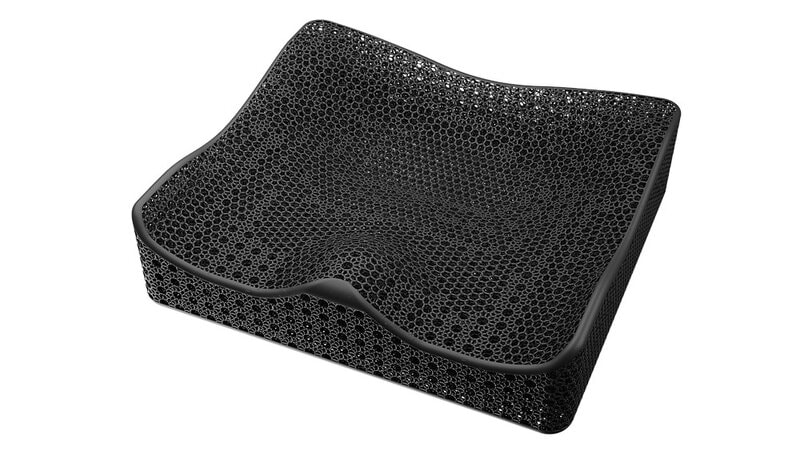
Kalogon launched the Verro, a 3D-printed wheelchair cushion produced with vat polymerization and a variable-density elastomer lattice designed to vary firmness across the seating surface. The product is available in two models—the Verro variable-density lattice and Verro dual-density foam—and carries Medicare code E2609.
The lattice design creates firmer zones where positioning support is needed and softer areas where pressure should be diffused. Kalogon says cushions can be configured online using either a 3D scan created from a mold or manual measurements. The lightweight cushion includes an outer cover, can be cleaned in a dishwasher and is expected to be delivered in about two weeks.
For wheelchair users, the Verro offers personalized support for needs such as pelvic obliquity, asymmetry and windswept posture. The launch reflects growing adoption of customized, 3D-printed lattice structures in adaptive seating and medical comfort applications.
Image Credit: Kalogon
What Makes This Trend Stand Out
- Variable-density Seating
- Personalized firmness zones in wheelchair cushions indicate growth potential for comfort products that merge posture support with pressure redistribution.
- 3d-printed Medical Lattices
- Additive manufacturing enables complex elastomer structures that can replace conventional foam in adaptive seating, orthotics and patient-support surfaces.
- Scan-based Customization
- Digital fitting workflows using 3D scans or remote measurements create scalable pathways for made-to-measure mobility and rehabilitation products.
Sectors Adopting This
- Mobility Aids
- Wheelchair accessory makers face new opportunities around lighter, cleaner and more precisely fitted seating systems for long-term users.
- Medical Devices
- Regulated cushion products tied to reimbursement codes highlight how personalized materials can enter mainstream clinical procurement channels.
- Rehabilitation Technology
- Clinicians and rehab providers can benefit from adaptive seating solutions that address complex postural conditions through digitally configured designs.