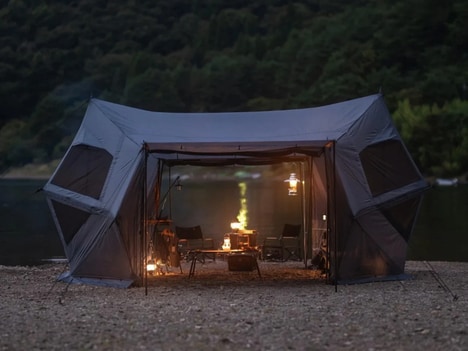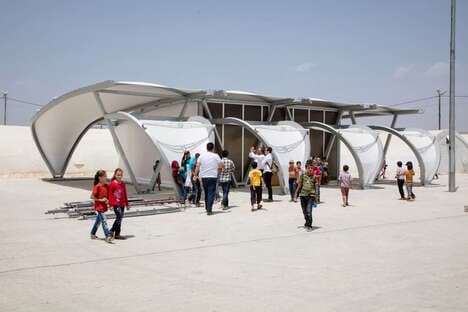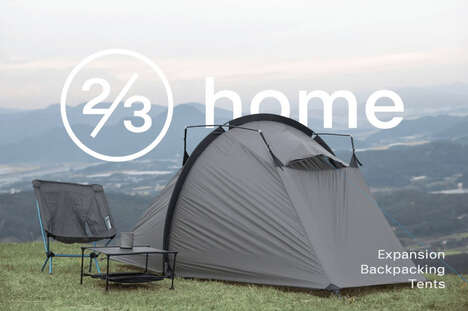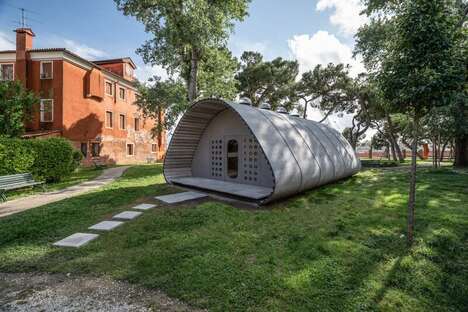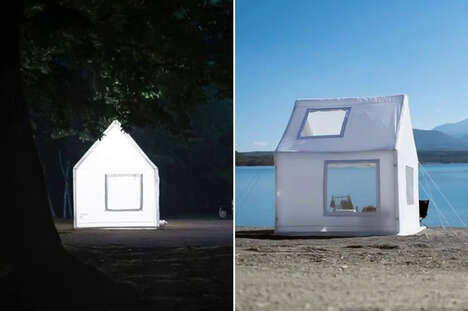


The Weaving a Home project explored the ways in which families and entire communities could be offered life's most basic comforts in the event of geographic displacement. Abeer Seikaly came up with a design that's taken inspiration from woven baskets, paper lanterns and snakeskin for an intriguing outcome that's lightweight, compact, portable and offers a quality level of protection.
Refugees of war and natural disasters could unfold the tent easily to expand its accordion-style walls, coming to form an abode in the shape of an igloo. Its skin would be made from a framework of sinuous structural tubing that would be covered by weatherproof fabric. Pockets in the exterior are optimized for heat absorption and ventilation. Weaving a Home would harvest a small amount of energy to store in its battery, plus it would collect rainwater for drinking and bathing.
What Makes This Trend Stand Out
- Portable Refuges
- The development of movable and compact shelters for disaster-stricken areas and refugee camps.
- Weatherproof Fabrics
- The creation of textile fabrics that can withstand harsh weather conditions and provide long-lasting protection.
- Sustainable Living
- The promotion of eco-friendly and sustainable living through design innovations in architecture and structural engineering.
Sectors Adopting This
- Textile Manufacturing
- Innovations in textile manufacturing technologies to produce weatherproof and durable fabrics that can adapt to different weather conditions.
- Architecture and Engineering
- Design and engineering companies can look for ways to incorporate sustainability into their projects and develop shelters that are more durable, resilient, and cost-effective.
- Renewable Energy
- Innovations in renewable energy technologies to provide self-sustaining power solutions in remote locations and areas with limited access to electricity.