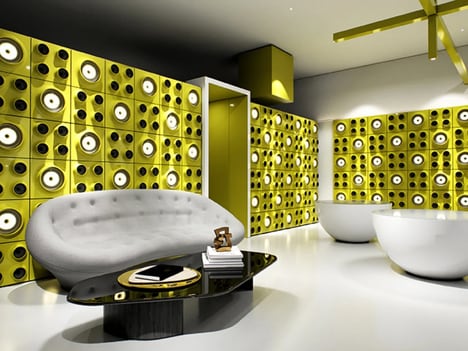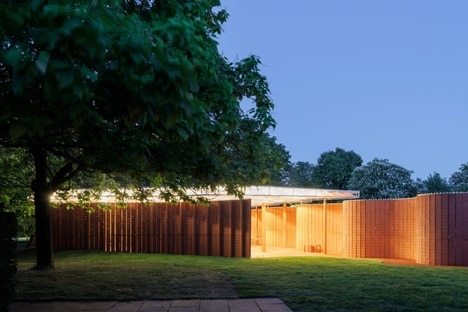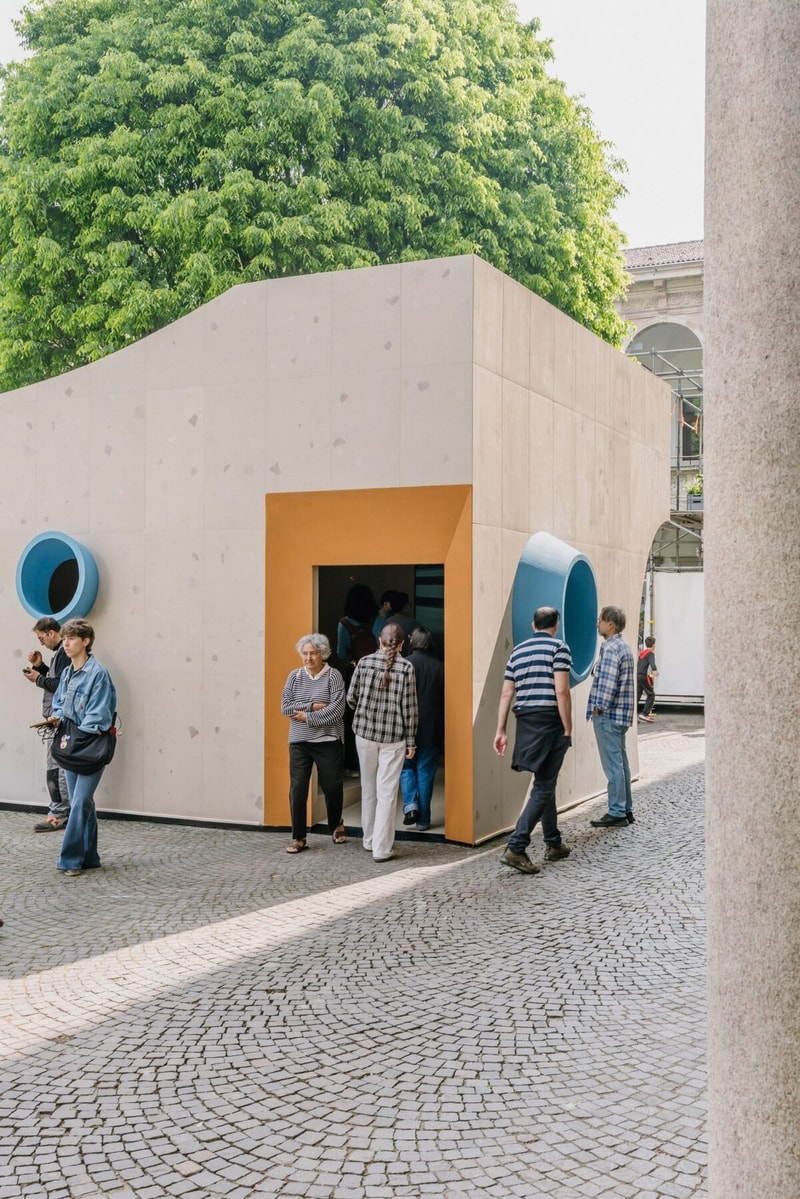
VitrA x Snøhetta installation was created for Milan Design Week 2026 as part of Interni Materiae, an exhibition exploring materiality and transformation. Designed by architecture studio Snøhetta for Turkish ceramics brand VitrA, the geometric structure was clad entirely in the company's 100 percent recycled ceramic tiles.
Circular openings edged in blue punctuate the walls, while a large roof oculus introduces natural light into the enclosed space. The installation was conceived around the qualities of water, light, scent, and sound, creating an immersive environment that highlighted both VitrA's products and its approach to material innovation.
The interior centers on a shallow reflective pool positioned beneath the oculus, where a series of recycled ceramic washbasins are displayed. A wedge-shaped void lined with orange tiles cuts through one corner of the structure, adding contrast to the otherwise muted exterior. The installation was designed to communicate VitrA's commitment to circular production methods and the reuse of ceramic materials within its manufacturing processes.
Image Credit: VitrA
What's Driving This Trend
- Recycled Ceramic Material Adoption
- Growing acceptance of 100 percent recycled ceramics signals opportunities to displace virgin clay products through validated performance parity and eco‑label differentiation.
- Immersive Material‑focused Installations
- Experiential, sensory-driven exhibits are redefining product presentation and creating new value for materials by turning raw components into narrative environments.
- Water and Light Integration in Design
- Design approaches that foreground water and natural light highlight potential for multifunctional surfaces and fixtures that combine aesthetic, acoustic and moisture‑management properties.
Who This Affects Most
- Ceramics Manufacturing
- Manufacturing processes centered on closed‑loop recycling create scope for vertically integrated supply chains that lower input costs and minimize landfill dependency.
- Architectural Exhibitions and Installations
- Curatorial programs focused on material innovation open pathways for studios and brands to monetize design research through commissioned, brand‑forward installations.
- Sustainable Building Materials Supply
- Specification networks prioritizing recycled and circular materials present opportunities for new product categories that meet green building certifications and lifecycle reporting demands.