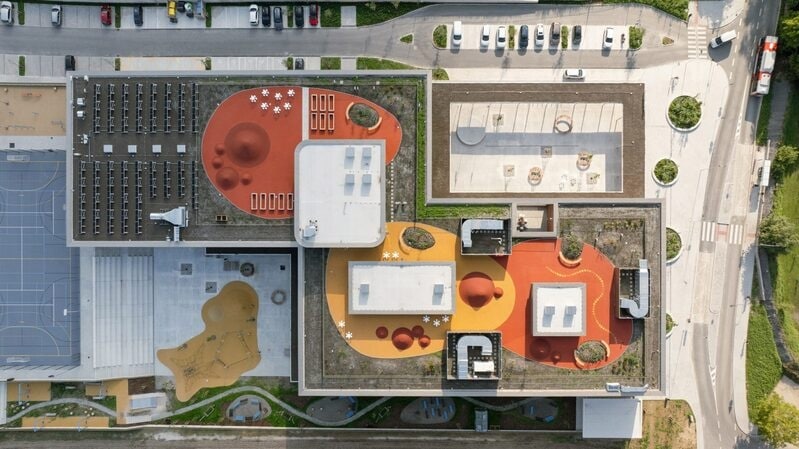
Vida Elementary School is a new primary school in Prague designed by Opočenský Valouch Architects that organizes teaching spaces around shared community areas. The building is structured as a compact, clearly legible volume that prioritizes accessibility, daylight, and straightforward circulation for young students. Classrooms are arranged to support flexible teaching formats, while communal zones function as informal gathering and learning spaces throughout the day.
The exterior uses a restrained architectural language with carefully proportioned openings that balance natural light and privacy. Interior spaces emphasize durability and clarity, with materials selected for long-term use in an educational environment. Outdoor areas are directly connected to interior zones, allowing movement between classrooms and exterior play or learning spaces. The project reflects a contemporary approach to school design that focuses on functional clarity, adaptability, and the everyday needs of students and teachers within an urban context.
Image Credit: Alex Shoots Buildings
What Makes This Trend Stand Out
- Flexible Learning Environments
- Emerging design paradigms in education prioritize adaptable classroom setups that accommodate diverse teaching formats and spontaneous group learning.
- Integrated Indoor-outdoor Learning
- A blend of indoor and outdoor educational environments connects students with nature, enhancing their learning experience through direct engagement with external spaces.
- Architectural Health and Well-being
- School buildings designed with abundant natural light and thoughtful layout promote student and teacher well-being, optimizing the educational atmosphere.
Sectors Adopting This
- Educational Architecture
- Innovative school design caters to evolving educational methods, emphasizing environments that adapt to pedagogical shifts and multifunctional spaces.
- Sustainable Construction
- Eco-friendly construction practices are becoming crucial in developing educational facilities that are functional, durable, and considerate of environmental impact.
- Urban Planning
- Efficient integration of educational institutions within urban areas improves accessibility and community engagement, fostering a symbiotic relationship with city infrastructure.