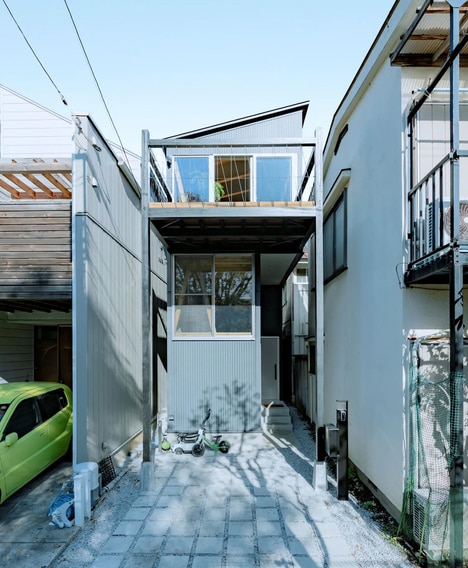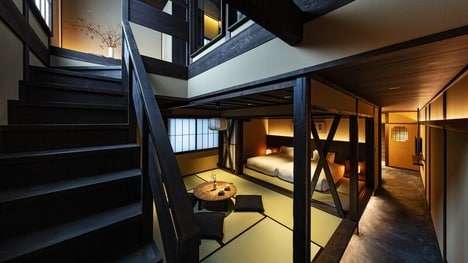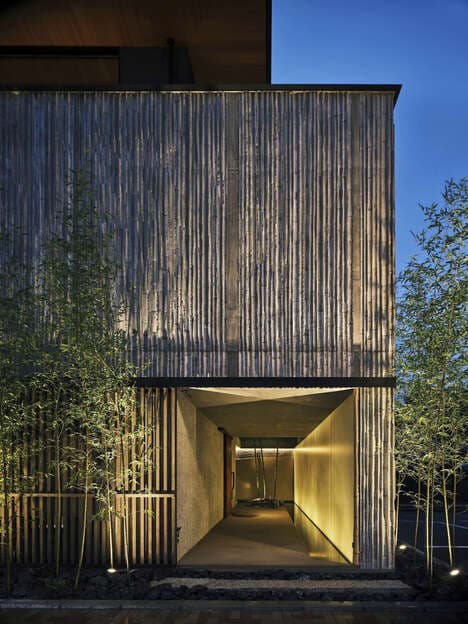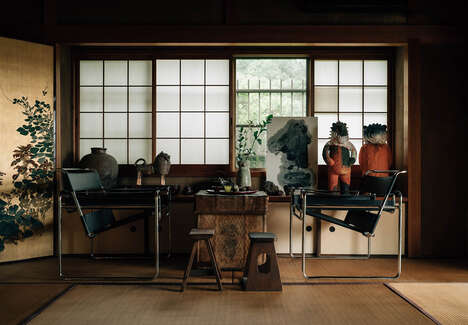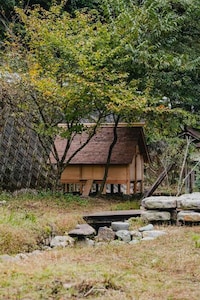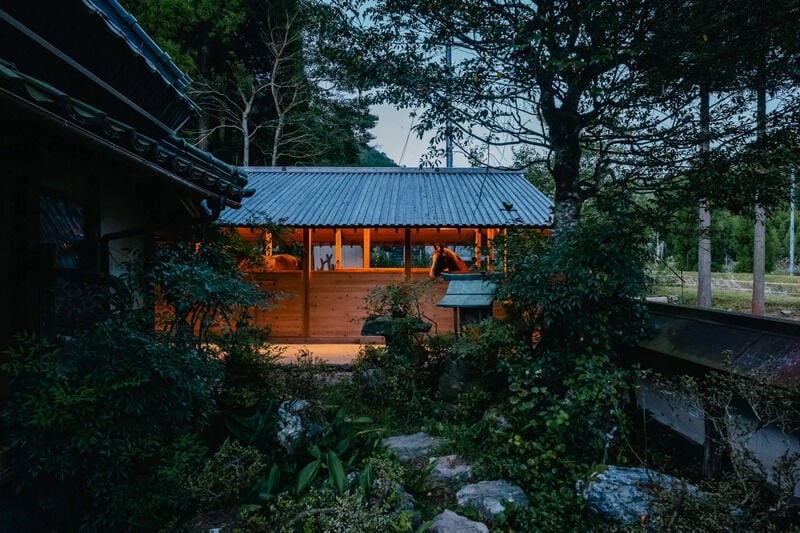
Architecture studio 2m26 designs the new Umagoya stable that joins elements of both cypress and cedar to "connect humans, horses, and nature." The stable is located near Kyoto, Japan on the grounds of a traditional home in Keihoku. It is made up of two wooden structures that function as shelter for two horses -- there is a utility space and a saddle room.
The studio notes that "The whole structure and roof of each building are made of locally-sourced cypress and cedar timber, assembled by traditional Japanese joinery in order to respect the soul of the adjacent constructions. Both buildings sit on stone basements, and floors have been made of a compressed soil and lime mix to let the ground breathe while resisting the movement of the horses."
Image Credit: 2m26
What's Driving This Trend
- Sustainable Architecture
- The use of locally-sourced timber and traditional Japanese joinery in the design of the Umagoya stable highlights an opportunity for sustainable architecture practices.
- Luxury Stables
- As more individuals invest in luxury facilities for their horses, there is an opportunity for development in the luxury stable industry.
- Natural Materials
- The use of natural materials in the design of the Umagoya stable highlights a growing trend towards the use of sustainable and eco-friendly materials.
Who This Affects Most
- Architecture
- The Umagoya stable presents an opportunity for architecture firms to incorporate traditional Japanese joinery and sustainable building practices in their designs.
- Equestrian Industry
- The luxury stable industry is on the rise as individuals continue to invest in high-quality facilities for their horses.
- Sustainable Building Materials
- Incorporating sustainable and eco-friendly materials in building design is a growing trend that presents opportunities for companies in the construction and building materials industries.