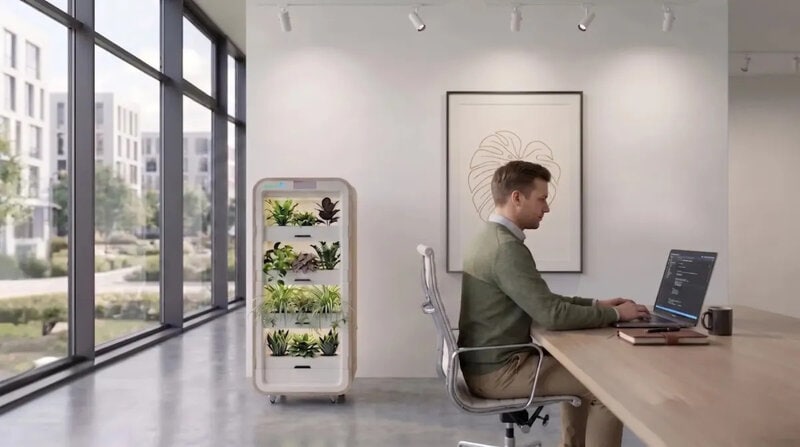
Greenairy is developing plant towers for offices that target airborne gases, helping staff in sealed workplaces reduce exposure to volatile organic compounds (VOCs), chemicals that easily escape into indoor air. The towers pull air through the plants and return it after the plants break down those gases.
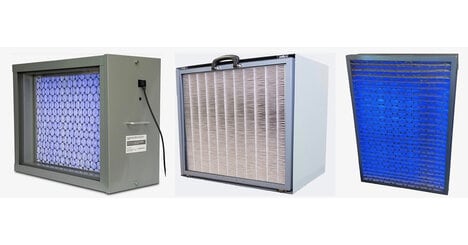
In short pilots in Singapore offices, the setup outperformed a medical-grade ionizer and a HEPA purifier in VOC removal speed and ended office hours with the lowest readings. Daily VOC averages and peaks dropped 50%, reducing the need for frequent filter swaps.
Greenairy plans large-scale manufacturing after certification and expects its first mass-produced towers to reach customers in Singapore in the first half of 2027. Launching in the same market as its office pilots keeps the rollout tied to workplaces trying to curb toxic gases without replacement filters.
Image Credit: Greenairy
Why This Trend Is Growing
- Biofiltration Office Towers
- Plant-based air-cleaning fixtures point to a new category of workplace infrastructure that reduces chemical exposure while lowering dependence on disposable filtration materials.
- Vocal Indoor Air Metrics
- Real-time tracking of VOC peaks creates room for air-quality systems that compete on chemical reduction performance rather than broad purification claims.
- Filterless Wellness Design
- Nature-integrated purification formats suggest fresh possibilities for offices seeking health-focused upgrades with fewer recurring maintenance costs.
Industries Being Reshaped
- Commercial Real Estate
- Office landlords can differentiate sealed work environments through built-in air-quality amenities tied to measurable reductions in toxic indoor gases.
- Workplace Wellness
- Employee health programs gain a tangible infrastructure layer as VOC mitigation becomes part of productivity, comfort, and safety strategies.
- Air Purification
- The category faces disruption from living systems that challenge HEPA and ionizer models by emphasizing gas breakdown and reduced consumable replacement.