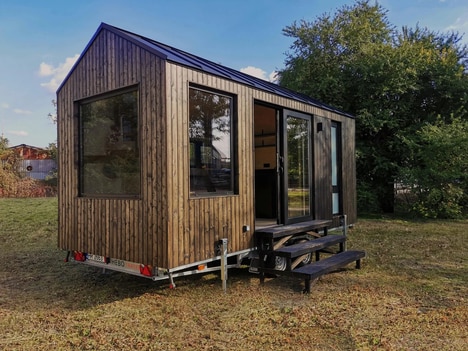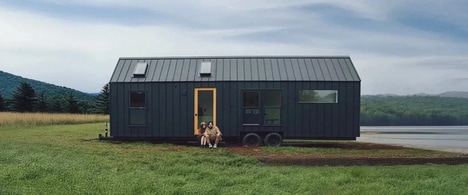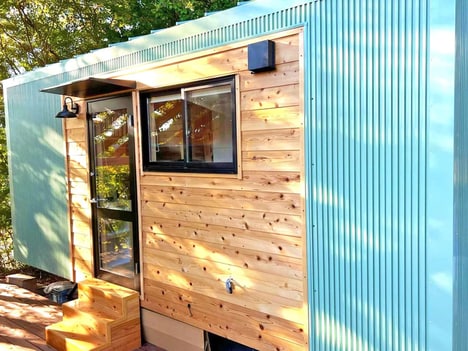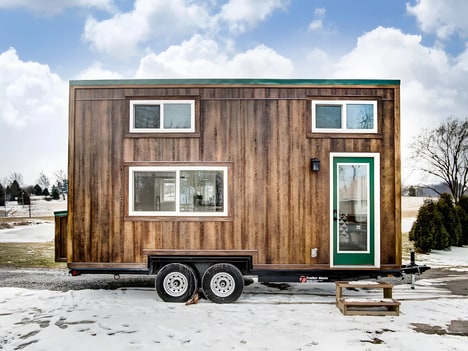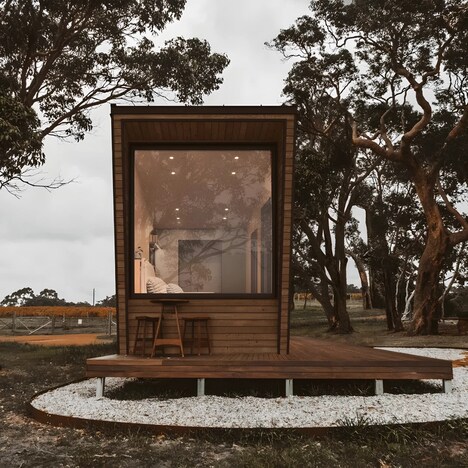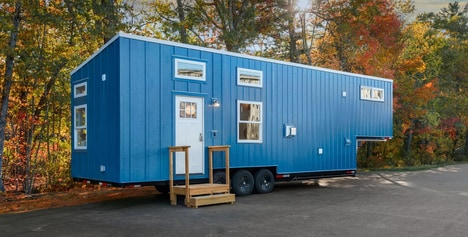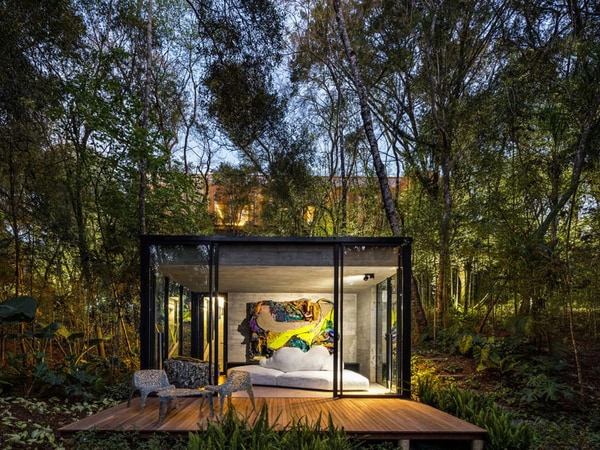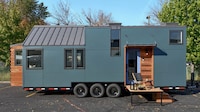
The Tiny Timber Homes Kanuka tiny house is a small but mighty home designed with essential amenities, but a distinct focus on getting inhabitants outside to help combat feelings of claustrophobia in the small space.
The tiny house starts off with a dual-door layout that features a glass door on each to help visually expand the living space to include the surrounding landscape, while also encouraging easy access to the outdoors. The main floor boasts a spacious living room, kitchen and bathroom, while the storage-packed staircase leads up to the bedroom loft.
The Tiny Timber Homes Kanuka tiny house can be customized to the preferences of the customer with different finishes to choose from and is priced starting at NZD 100,000.
Image Credit: Tiny Timber Homes
What Makes This Trend Stand Out
- Outdoor-integrated Micro Homes
- Compact dwellings that visually and physically extend into surrounding landscapes create new potential for small-space living models centered on wellness, openness, and reduced claustrophobia.
- Dual-access Tiny Layouts
- Two-door configurations in tiny homes introduce differentiated floor plan strategies that improve mobility, natural light, and flexible indoor-outdoor circulation.
- Customizable Compact Housing
- Personalized finishes and modular design choices are reshaping tiny homes into more adaptable products for buyers seeking affordability without sacrificing individuality.
Sectors Adopting This
- Tiny Homes
- The growing demand for livable small-format housing supports fresh product concepts that combine space efficiency, outdoor access, and premium customization.
- Residential Construction
- Builders are finding new market relevance in compact, prefabricated, and lifestyle-driven housing formats that challenge conventional single-family home expectations.
- Sustainable Living
- Smaller homes with intentional layouts and nature-connected features strengthen low-impact lifestyle offerings for consumers prioritizing affordability, simplicity, and environmental responsibility.