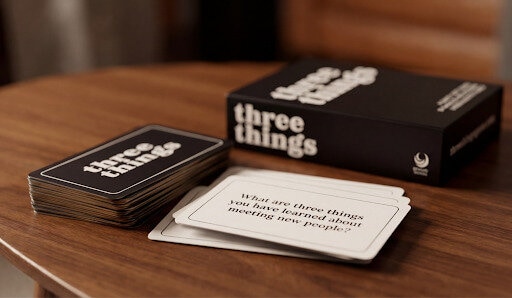
Live In Wonder has introduced a card-based question-and-answer game called Three Things, created by Eric Saperston, which consists of 52 cards designed to facilitate meaningful conversations by prompting players to share three responses drawn from their own life experiences. The game is currently available for purchase through multiple retailers including Amazon, Barnes and Noble, Beyond Words, Bookshop, and Books-A-Million, with an English edition already released and German translation available, plus additional language versions planned.
The Three Things card game's underlying mechanic — asking for three answers to a single question — is deliberately designed to move beyond superficial small talk, as the first response tends to be obvious or rehearsed, the second requires more thought, and the third often reveals something unexpected or vulnerable, which makes each round feel like a journey of discovery.
Image Credit: Live In Wonder
Key Themes Behind This Trend
- Conversational Card Games
- Question-led tabletop formats are turning casual play into structured emotional exchange, creating white space for products that blend entertainment with self-discovery.
- Experience-based Storytelling
- Personal memories and lived experiences are becoming core game mechanics, signaling potential for media formats that deepen connection through reflective participation.
- Multilingual Connection Tools
- Localized editions of social wellness products are expanding intimate conversation experiences across cultures, opening room for globally adaptable relationship-building formats.
Where This Applies
- Board Games
- The tabletop market is shifting beyond competition toward empathy-centered play, with growth potential in simple mechanics that generate meaningful interpersonal moments.
- Mental Wellness
- Reflection-based social products are intersecting with emotional health, suggesting opportunities for accessible tools that support vulnerability outside clinical settings.
- Publishing
- Retail-ready card decks with narrative and self-development themes are broadening book-adjacent formats, allowing publishers to extend ideas into interactive experiences.