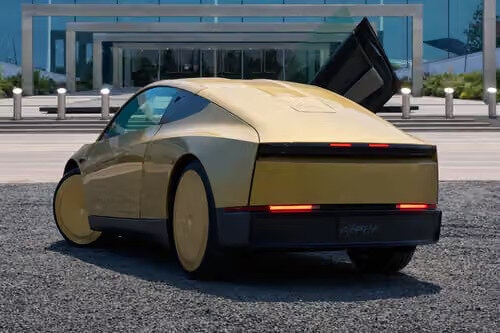
The Tesla Cybercab integrates Starlink V5 satellite connectivity through a low-profile dish mounted within the rear roof panel. Revealed on a gold-painted prototype at Gigafactory Texas, the system is based on the new Starlink V5 hardware and supports download speeds exceeding 375 Mbps. The connection enables passengers to stream 4K video, play games and complete productivity tasks while travelling. Despite the addition, the autonomous vehicle's onboard AI4 computer continues to handle all driving functions independently without requiring an active internet connection.
According to Tesla, the satellite link is designed to support fleet management, customer service and navigation updates rather than vehicle control. While current robotaxi testing is focused on urban areas with reliable cellular coverage, integrated satellite connectivity provides a backup connection in locations where traditional mobile networks are limited. Elon Musk has also indicated that future Tesla vehicles are expected to adopt built-in Starlink hardware.
Image Credit: Tesla
What's Driving This Trend
- Satellite-connected Mobility
- Always-on broadband in autonomous vehicles expands in-cabin entertainment, productivity and service continuity beyond the limits of terrestrial cellular networks.
- Autonomous Fleet Resilience
- Backup satellite links strengthen robotaxi operations by supporting remote diagnostics, navigation updates and customer support in areas with inconsistent mobile coverage.
- In-transit Digital Experiences
- High-speed connectivity inside driverless vehicles creates new space for streaming, gaming and work platforms tailored to captive passenger time.
Who This Affects Most
- Autonomous Vehicles
- Robotaxi platforms with embedded satellite hardware can differentiate through reliable connectivity while keeping safety-critical driving systems independent from networks.
- Satellite Communications
- Consumer mobility integration opens a broader market for low-profile satellite terminals designed for compact, high-bandwidth vehicle installations.
- Digital Entertainment
- Connected autonomous cabins introduce a premium channel for immersive media, cloud gaming and personalized content services during urban and rural travel.