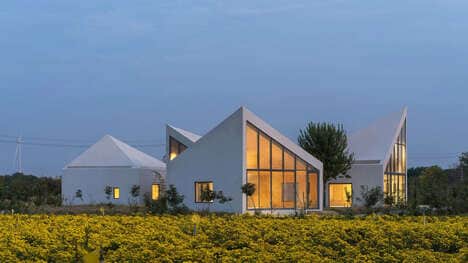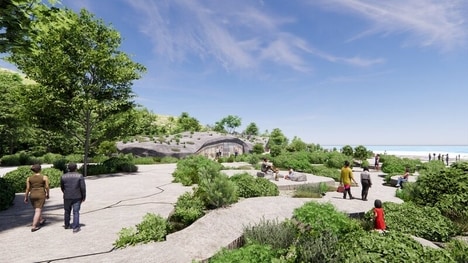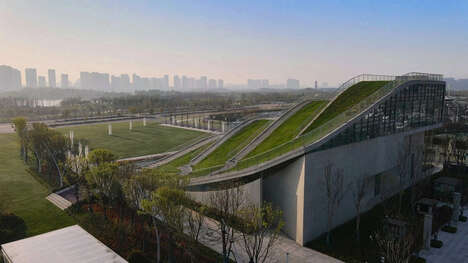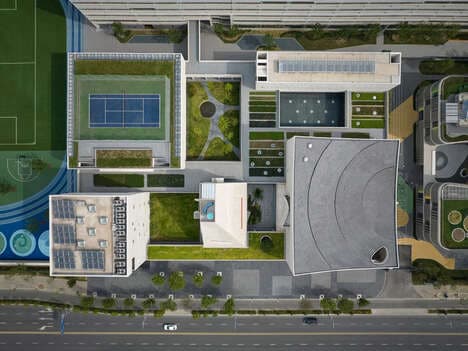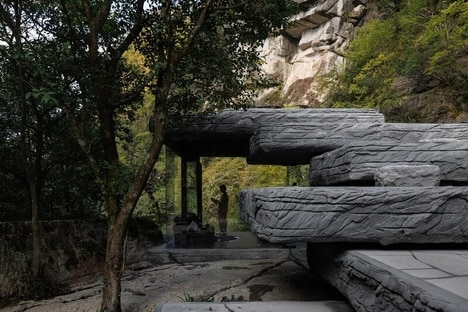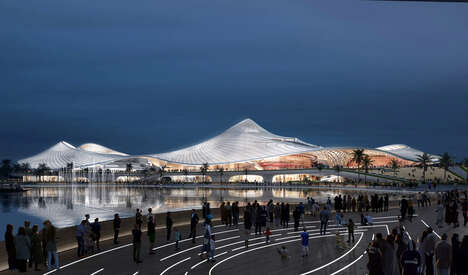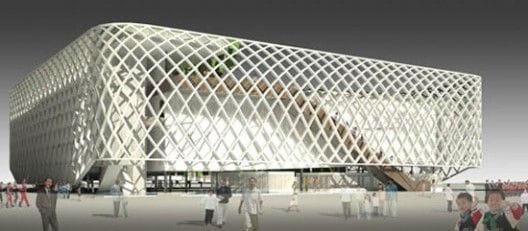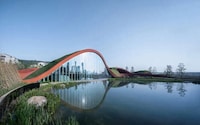
When it's explained that a piece of architecture has been inspired by nature, it doesn't necessarily mean that the resemblance is strictly discernible. In the case of the Taizhou City Cultural and Creative Industry Building, you might not guess that its unique fragmented facade is influenced by the mountains and cliffs on the horizon.
When Miliy Design approached the hilly site with some of the most breathtaking views in all of China, they were reminded of the exquisite paintings of the panoramas depicted by the country's past masters. The textural techniques used to express the choppiness and splintering of the distant rock faces were translated into sliver-like excisions from the structure's white cladding. Embodying such an imaginative take on the environment and the visual arts, the Taizhou City Cultural and Creative Center is a fitting home for a gallery and arts education spaces.
What Makes This Trend Stand Out
- Nature-inspired Architecture
- Architects and designers are finding inspiration from nature to create unique and visually appealing buildings that blend in with their surroundings.
- Textured Facades
- Architecture firms are using textured facades to create unique and visually striking buildings that stand out from traditional structures.
- Creative Industry Buildings
- There is a growing trend for buildings that combine cultural centers, galleries, and education spaces into one cohesive structure.
Sectors Adopting This
- Architecture
- Architects can explore nature-inspired designs and textured facades to differentiate their buildings and provide a unique experience for occupants.
- Design
- Designers can take inspiration from nature and textured surfaces to create new and visually appealing products, such as furniture and home decor.
- Arts and Culture
- Cities and organizations can create creative industry buildings to combine cultural centers, galleries, and education spaces to foster creativity and innovation within their communities.