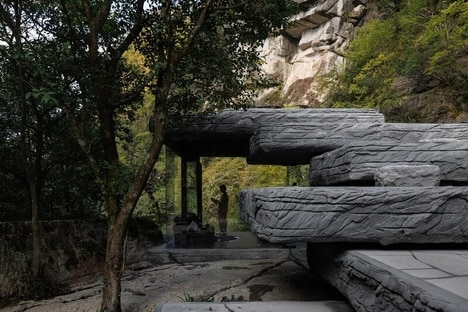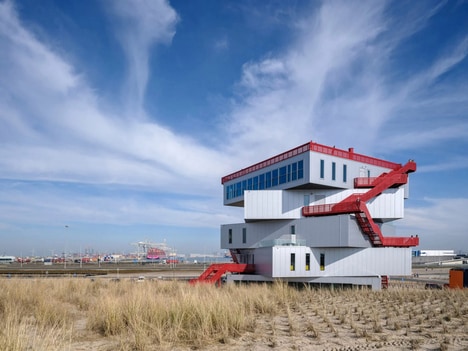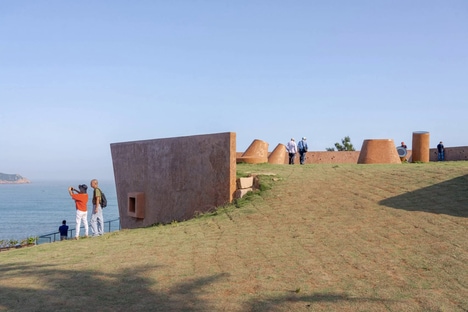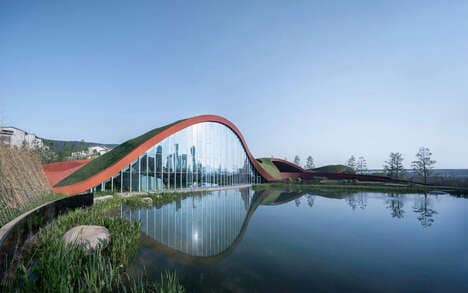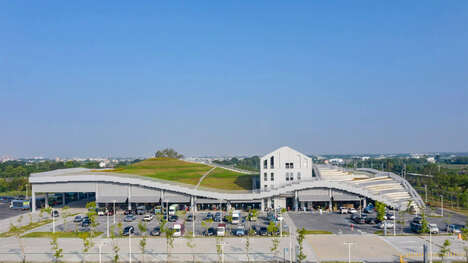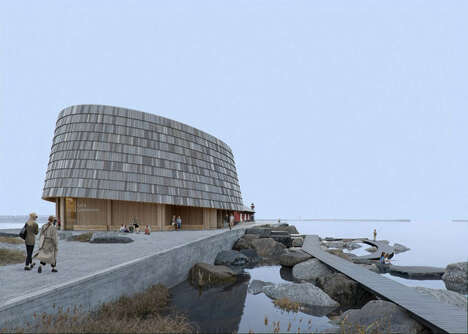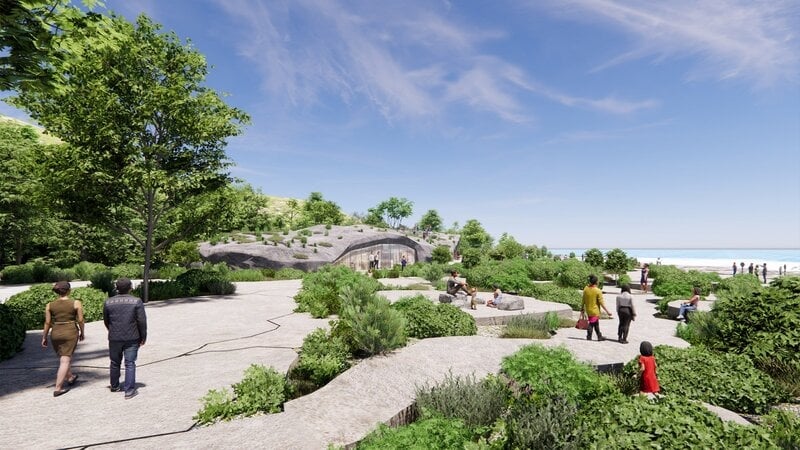
The Nature Rocks visitor centre by MVRDV transforms Taiwan’s sculptural sandstone coastline into an integrated infrastructure system with rock-inspired pavilions, paths, and public spaces. The masterplan focuses on reimagining Jialeshui’s straight road as a cracked, rocky landscape that reconnects forest and shore. Along this trail, “the artificial elements take the shape of the surrounding nature, like natural extensions of the site rather than foreign objects,” says founding partner Winy Maas.
New facilities include a visitor centre, lookout pavilions, exhibition spaces, and restrooms, which are embedded within existing building footprints, preserving the natural terrain. The buildings mimic local formations and feature stargazing terraces atop the visitor centre roof. Cracked paving acts as a passive drainage system and supports biodiversity through planting strategies that move from tall forest species to salt-tolerant coastal varieties. With recycled-aggregate concrete designed to host moss and plants over time, the design evolves with the landscape rather than imposing on it.
Image Credit: MVRDV
What Makes This Trend Stand Out
- Nature-inspired Design
- The use of rock-inspired pavilions and paths represents a shift towards architectural designs that blend seamlessly with natural landscapes, offering unique visual and functional experiences.
- Biodiversity-enhancing Infrastructure
- Incorporating plant-supportive materials and passive drainage systems into infrastructure highlights a growing trend of creating urban spaces that contribute positively to local ecosystems.
- Sustainable Building Materials
- The integration of recycled-aggregate concrete that promotes the growth of moss and plants underscores an innovative approach to environmentally responsive architecture.
Sectors Adopting This
- Eco-tourism
- By embedding facilities within natural landscapes and enhancing biodiversity, the development offers new potential for eco-tourism initiatives that prioritize environmental conservation and visitor engagement.
- Green Architecture
- The design elements that mimic natural formations and allow for environmental integration exemplify advancements in the green architecture industry focused on sustainability and ecological harmony.
- Landscape Architecture
- Integrating stargazing terraces and plant-supportive materials in construction highlights opportunities for landscape architects to create spaces that are both functional and aesthetically aligned with nature.