
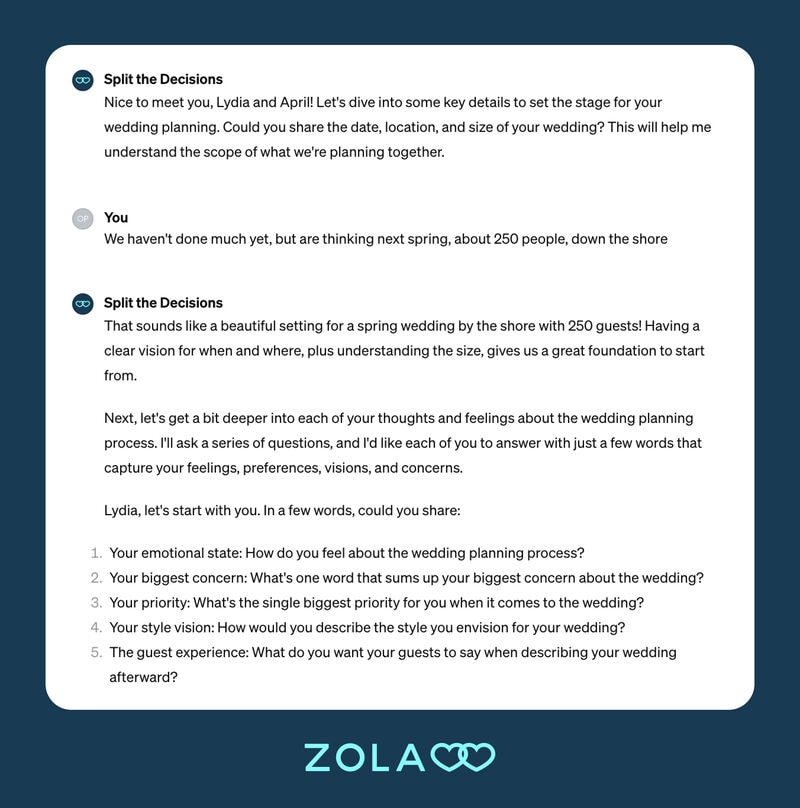
Disagreements often arise between couples during wedding planning and to minimize friction and streamline the process, Zola debuted an AI tool called Split the Decisions. This tool helps couples divide the decisions in wedding planning equally, and it addresses the problem of one person taking on the burden of planning a wedding for two. Split the Decisions divides wedding planning tasks for individuals, and provides a list of joint tasks.
This tool not only has the potential to help couples enjoy a smoother journey toward their special day, it may also help to spark important conversations about invisible labor and decision fatigue. According to Zola, "Couples make more than 500 decisions over the course of planning a wedding, and the 'mental load' often falls on one person."
What's Driving This Trend
- Equal-division Wedding Planning
- Opportunities lie in offering tools that assist couples in fairly distributing wedding planning tasks to increase efficiency and reduce conflicts.
- AI-assisted Decision Making
- Leveraging AI tools for shared decision making can revolutionize the wedding planning process and improve overall collaboration.
- Mental Load Awareness
- Advancements in tools that raise awareness about mental load distribution in relationships could lead to more balanced and harmonious partnerships.
Who This Affects Most
- Wedding Planning Software
- Innovative solutions in wedding planning software can cater to couples seeking streamlined and fair distribution of tasks during the planning process.
- AI Technology
- The application of AI technology in personalized decision making tools has the potential to transform not only wedding planning but various collaborative processes as well.
- Relationship Counseling
- The development of counseling services that address mental load dynamics in relationships can support couples in navigating shared responsibilities effectively.