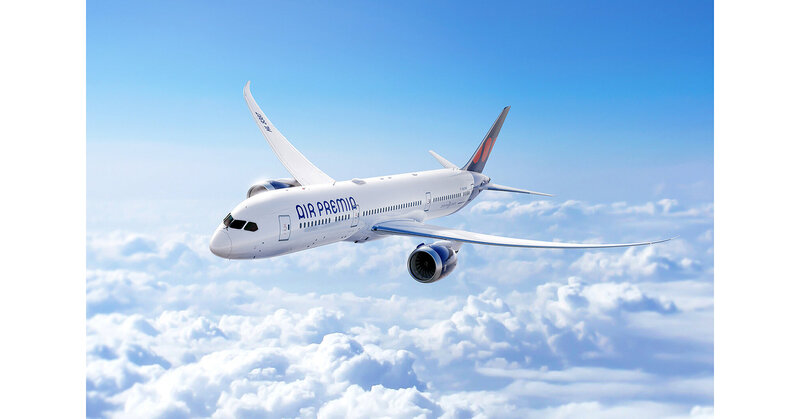
Spacious long-haul airline seating is becoming a priority for Air Premia as the carrier upgrades its Boeing 787-9 cabins to provide additional passenger comfort. The airline recently increased Economy Class seat pitch from 31 to 33 inches on one aircraft, creating more personal space by reducing the number of available seats.
The updated aircraft entered service on October 31 with 326 seats instead of 344, representing an 18-seat reduction. Eight of Air Premia's nine aircraft now provide at least 33 inches of Economy seat pitch, with the final upgrade planned for the first half of 2027. Premium Economy passengers also benefit from 42–46 inches of seat pitch and wider seating.
For Air Premia, prioritizing passenger space offers a way to differentiate its long-haul services. Combined with expanding connections between the United States and Asia, the upgraded cabins could attract comfort-conscious travelers.
Image Credit: Air Premia
What's Driving This Trend
- Comfort-first Economy
- Airlines that trade marginal seat density for expanded pitch create new value tiers for travelers seeking affordability without the discomfort of tightly packed cabins.
- Density-reduced Cabins
- Reduced cabin capacity reframes long-haul profitability around passenger experience, loyalty, and fare premiums rather than maximum seat counts alone.
- Hybrid Premium Travel
- Middle-ground cabin products are gaining relevance as travelers look for spacious seating and upgraded comfort without full business-class pricing.
Who This Affects Most
- Commercial Aviation
- Passenger comfort investments are reshaping competitive differentiation among long-haul carriers serving high-demand international routes.
- Aircraft Interiors
- Cabin redesign suppliers can benefit from demand for seating layouts that balance space, weight, certification requirements, and revenue efficiency.
- Travel and Tourism
- Comfort-enhanced flight options influence destination accessibility and traveler willingness to book longer international itineraries.