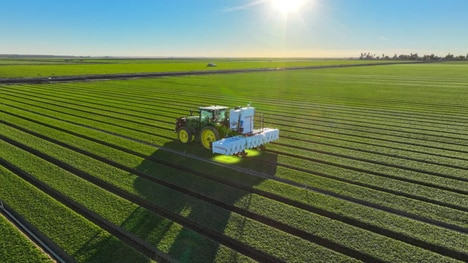
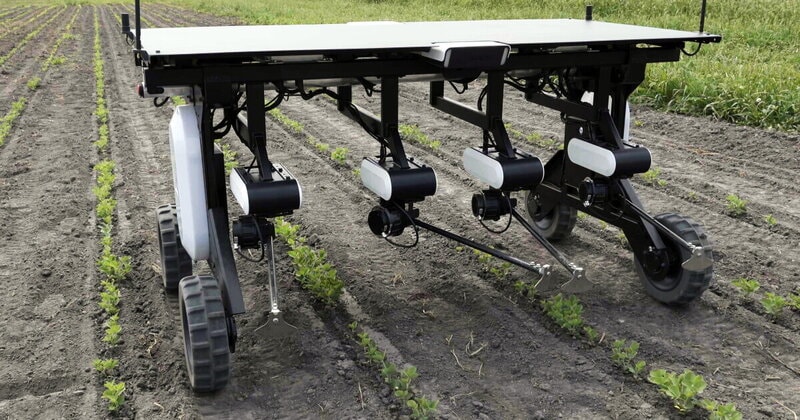
Aigen's Element Gen 2 brings AI-guided weed removal to farm plots with a solar-powered machine that separates weeds from crops and pulls them out instead of spraying herbicides. Built by the Redmond startup for growers managing low-cost crops, the robot travels through the field on its own power while removing unwanted plants.
A solar panel forms the machine's top surface, and four metal arms under the frame grab weeds and toss them behind the unit as it rolls. Running on solar power avoids diesel refueling, and Aigen has logged more than 30 orders for the solar-powered versions as fuel costs climb.
Solar power and AI turn weed control into a lower-touch job for farms that want to cut both chemical spraying and fuel use. More than 30 orders suggest buyers are treating autonomy as an operating-cost issue, not just a robotics feature.
Image Credit: Aigen
What Makes This Trend Stand Out
- Solar-powered Farm Robotics
- Autonomous equipment powered by onboard solar panels creates new value in farms seeking lower fuel dependence and longer field operating windows.
- Chemical-free Weed Control
- Mechanical weed removal systems offer a path for growers to reduce herbicide use while meeting cost and sustainability pressures.
- AI-guided Crop Recognition
- Machine vision that distinguishes crops from weeds enables precision agriculture tools to handle repetitive field tasks with less human oversight.
Sectors Adopting This
- Agricultural Robotics
- Robotics firms can differentiate through machines designed for lower-margin crops where operating savings matter more than premium automation features.
- Renewable Energy
- Solar integration into mobile equipment expands renewable applications beyond fixed infrastructure and into daily agricultural operations.
- Crop Management
- Farm service providers gain new models around autonomous, data-driven weed control that can reduce chemical inputs and labor constraints.