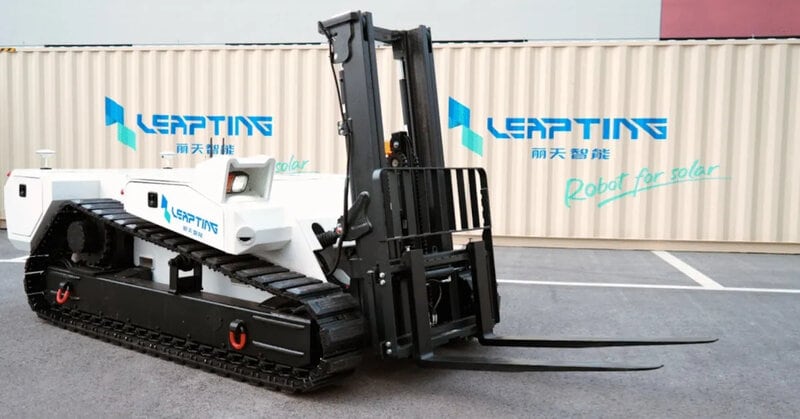
LEAPTING is bringing autonomous material handling to utility-scale solar crews with its Auto-Navigation Forklift Robot, a battery-powered tracked machine that carries module pallets from laydown yards to installation rows without a worker alongside it. The AFR also automates tracker loading, mounting modules in 40-second cycles to speed a job that is often manual.
Using satellite positioning, laser mapping and 3D vision, it can locate pallets and line up its forks while steering around obstacles. A 3,000 kg payload and eight hours of runtime make it suited to full-shift moves across sand, mud and icy ground.
Direct runs from laydown yards to installation rows turn solar logistics into a repeatable process, giving solar construction firms a way to cut labor exposure while keeping pallets moving. Tracked mobility across harsh sites also broadens where one robot platform fits, which may make automation easier to standardize across large solar builds.
Image Credit: LEAPTING
What's Driving This Trend
- Autonomous Solar Logistics
- Self-guided hauling systems are reframing utility-scale solar construction around repeatable material flows that reduce labor exposure on expansive job sites.
- Tracked Robotic Mobility
- Rugged tracked platforms create new potential for automation across sand, mud, ice, and other inconsistent terrain where wheeled machines often struggle.
- Vision-guided Material Handling
- Satellite positioning, laser mapping, and 3D vision are enabling forklifts to identify pallets, align loads, and navigate dynamic construction environments with minimal human oversight.
Who This Affects Most
- Solar Construction
- Large-scale renewable energy projects can benefit from robotic systems that standardize module transport and installation workflows across geographically challenging sites.
- Construction Robotics
- Autonomous forklifts and mobile machinery are expanding the role of robotics from controlled warehouses into unpredictable outdoor infrastructure settings.
- Industrial Equipment
- Battery-powered heavy-duty machines with navigation intelligence are shifting equipment design toward adaptable platforms suited for both productivity and safety gains.