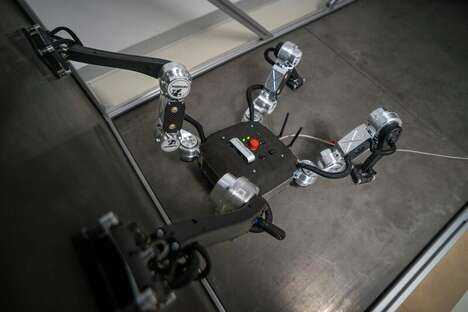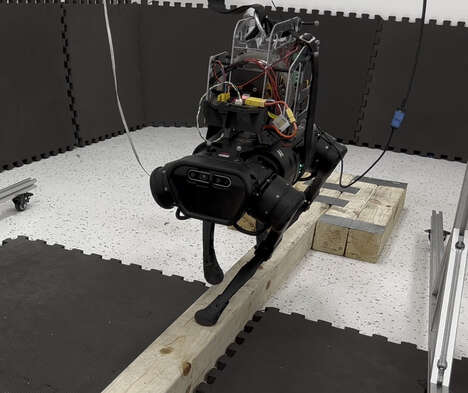
The Snake Monster robot is a peculiar new robot, developed by engineers at Carnegie Mellon University, that has six spidery legs and walks much like a spider. This robot is marked out by its easily reconfigurable platform that uses modular system architecture that can be used to govern robots with a wide array of configurations.
Each Snake Monster robot weighs around 8 kg and is fitted with six multi-jointed legs that each offer a reach of about 30 cm. The robot has a rectangular body and in its present form is supplied with power via an umbilical tether. The robot is capable of moving in any given direction and even boasts the ability to climb over obstacles.
What Makes This Trend Stand Out
- Modular System Architecture
- The Snake Monster robot's modular system architecture allows for easy reconfiguration and opens up opportunities for customizable robotics solutions.
- Multi-jointed Legs
- The use of multi-jointed legs in the Snake Monster robot enables versatile movement and potential applications in various industries.
- Obstacle Climbing Capability
- The Snake Monster robot's ability to climb over obstacles presents possibilities for enhanced maneuverability and exploration in challenging environments.
Sectors Adopting This
- Robotics
- The Snake Monster robot's modular system architecture and multi-jointed legs open up innovative opportunities for robotics applications in industries such as manufacturing, agriculture, and search and rescue.
- Disaster Response
- The Snake Monster robot's obstacle climbing capability makes it well-suited for disaster response operations, allowing it to traverse difficult terrains and locate survivors in hard-to-reach areas.
- Exploration
- The Snake Monster robot's unique features, including its multi-jointed legs and ability to climb obstacles, make it a potential asset for exploration of rugged terrains, such as space exploration or archaeological sites.