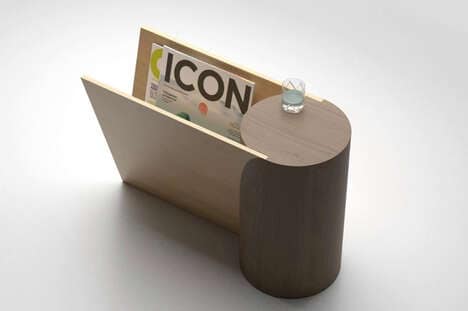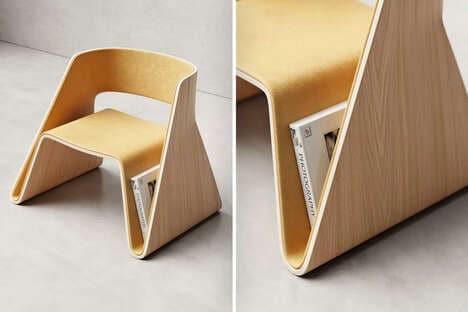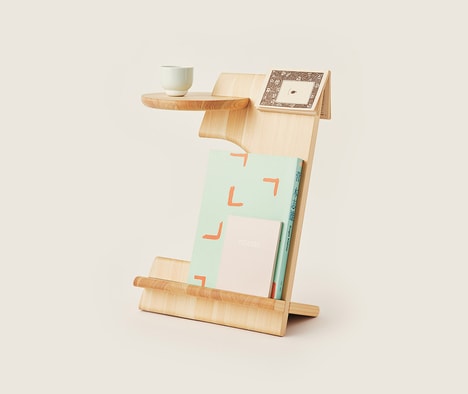
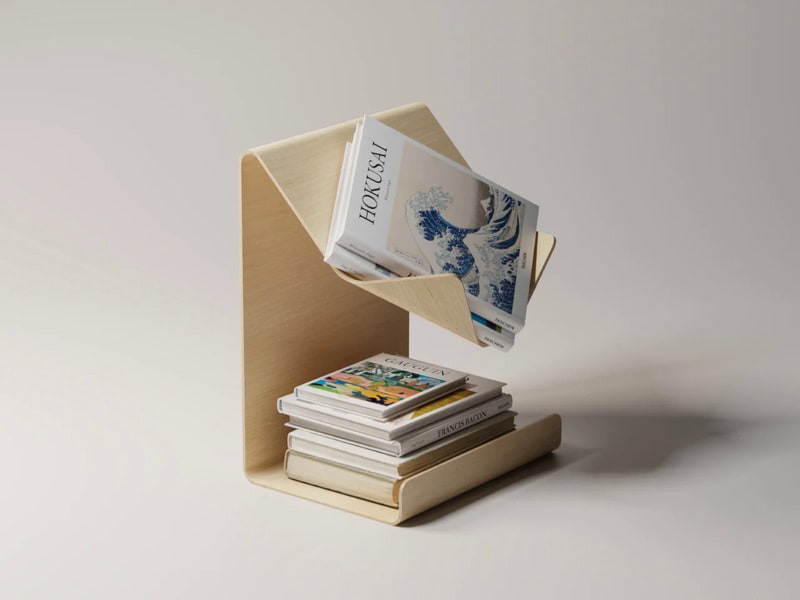
Faith Demirci designs the Skola magazine rack, which is a gracefully designed approach to practical storage. It enhances a space in a seamless way as it is crafted from a single piece of belt plywood. The rack forms one continuous curve that pushes the boundaries of the material's rigidity.
The organic silhouette forms a visual rhythm that brings attention while maintaining a subtle energy. The Skola also has a dual purpose build as it also nods to how people interact with reading materials. The bottom of the section crates a stable base for stacking magazines and books in a horizontal manner. This keeps the collection organized and accessible at once. The practical storage section also keeps publications kept in an orderly fashion.
Image Credit: Faith Demirci
Key Themes Behind This Trend
- Single-piece Furniture Design
- The use of single-piece construction in furniture design offers a unique aesthetic and functional appeal, presenting an opportunity to reimagine traditional furniture assembly methods.
- Organic Minimalism
- Organic shapes combined with minimalist design principles create a visually rhythmic and harmonious aesthetic, attracting consumers seeking simplicity with a natural twist.
- Dual-purpose Home Accessories
- Designs that integrate multiple functionalities into home accessories appeal to consumers looking for space-efficient and practical solutions in their living spaces.
Where This Applies
- Sustainable Furniture Manufacturing
- The creation of furniture from a single piece of material can reduce waste and streamline production, aligning with sustainable manufacturing practices.
- Interior Design
- The trend towards seamlessly integrated and minimalist design elements can redefine modern interior aesthetics, encouraging creative use of space and form.
- Home Organization Solutions
- Innovative storage solutions that combine style and functionality cater to the growing demand for efficient and aesthetically pleasing home organization tools.
Featured Reports

The Smaller Celebration Economy
The Future of Play Is More Human Than You Think