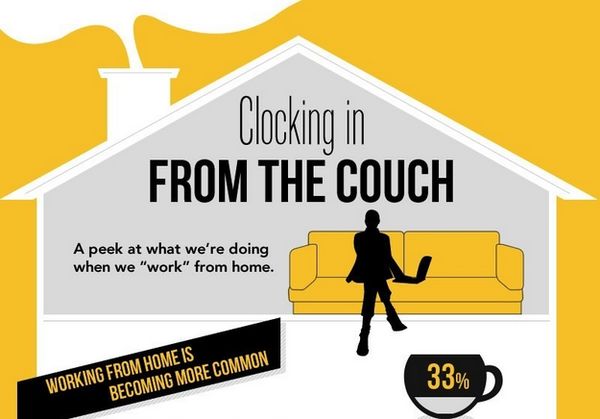
Many bosses and CEOs can attest to wanting the best environment for their employees, and thus the 'Should You Let Your Employees Work From Home' infographic is an insightful aid. While you may be thinking this infographic will be dry and info-packed, it actually has a lot of amusing, quirky questions.
The Should You Let Your Employees Work From Home flowchart asks logical questions about space, security and employee self-motivation, as well as more lighthearted ones like, "Would you trust them enough to babysit your children?" and "Are they more efficient workers when they wear sweatpants and sit in their La-Z-Boy?" This is certainly a highly entertaining and educational infographic that all employees and bosses should check out.
Implications - Countless contemporary offices function in online environments, and are therefore presented with the opportunity to let employees work from home. As such, all modern companies should adequately weight out the pros and cons of having their employees work from home. Finding a balance between individual employees work styles is invaluable to a company's ultimate success.
Why This Trend Is Growing
- Remote Work
- Companies should evaluate the pros and cons of allowing employees to work from home.
- Flexible Work Environment
- Creating a balance between individual employees' work styles can contribute to a company's success.
- Work-life Integration
- Evaluating whether employees can maintain work productivity while handling personal responsibilities.
Industries Being Reshaped
- Human Resources
- HR departments can explore policies and strategies that enable remote work and flexible work environments.
- Technology
- Developing tools and platforms that facilitate remote collaboration and communication.
- Consulting
- Providing expertise on implementing and managing remote work and work-life integration in organizations.