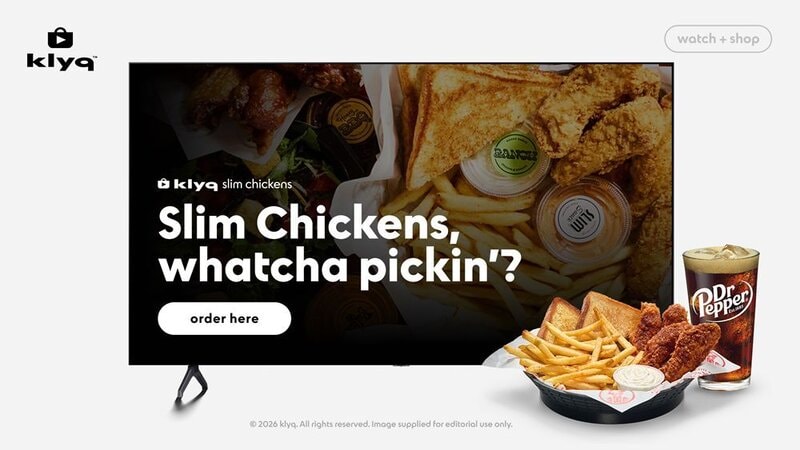
Slim Chickens is bringing TV-based food buying to Northwest Arkansas by placing its full menu on Samsung Smart TV home screens. Guests can request delivery with a remote, and the orders go directly into Slim Chickens' own online system instead of through a marketplace app.
The program pairs klyq with Gett, keeping checkout on the television and cutting out a phone, QR code or extra download. klyq already runs on over 80 million Samsung Smart TVs in the U.S., giving the format a large installed base beyond this first market.
Direct routing into Slim Chickens' first-party platform turns the living-room screen into a sales channel the chain controls end to end. Keeping TV orders at the brand's own menu prices widens couch-based impulse buying while protecting customer relationships and margins.
Image Credit: Slim Chickens
What Makes This Trend Stand Out
- Shoppable TV Ordering
- Living-room commerce is expanding as smart TVs become direct checkout surfaces, creating new revenue paths for brands that control the customer journey without relying on mobile apps or marketplaces.
- First-party Delivery Channels
- Restaurant brands are increasingly routing digital orders through owned platforms, preserving margins, menu pricing, and customer data while reducing dependence on third-party aggregators.
- Remote-control Commerce
- Frictionless purchasing through TV remotes transforms passive viewing moments into impulse-buying occasions, especially for food, retail, and entertainment-adjacent products.
Sectors Adopting This
- Quick-service Restaurants
- QSR operators can use connected-screen ordering to extend delivery occasions into the home environment while maintaining direct relationships with guests.
- Connected TV Platforms
- Smart TV ecosystems are evolving into commerce infrastructure, allowing hardware and software providers to monetize home screens beyond advertising and streaming subscriptions.
- Food Delivery Technology
- Delivery tech providers that integrate directly with branded ordering systems can differentiate by supporting marketplace-free transactions across emerging digital touchpoints.