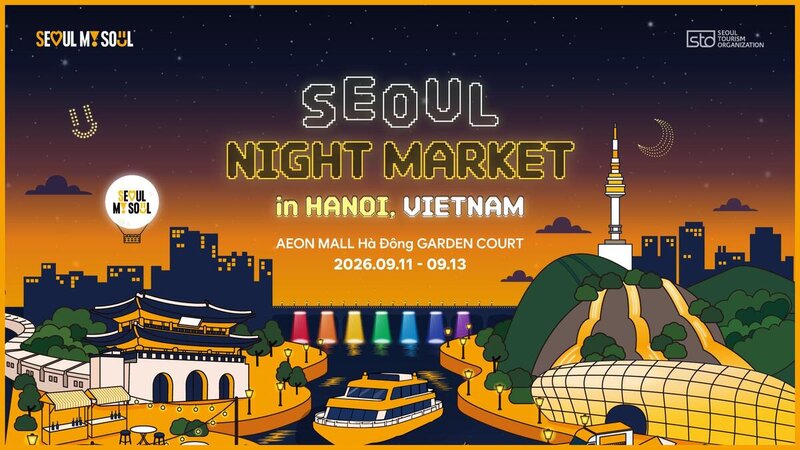
The Seoul Tourism Organization launched 'Seoul Night Market,' a three-day pop-up promotion at AEON Mall Ha Dong in Hanoi, Vietnam, centered on experiencing Seoul's nightlife. The event runs daily from 10 a.m. to 10 p.m. and features K-ramyeon tastings, a traditional knot keyring workshop, and a Seoul landmark game with official city merchandise as prizes.
The promotion aims to convert hands-on cultural engagement into future travel bookings to Seoul. The organization is offering the 'Discover Seoul Pass Heritage Edition' on a first-come, first-served basis, granting international visitors free entry to Seoul's four main palaces and additional historical sites.
As tourism boards more and more deliver destination experiences directly to potential travelers instead of waiting for them to visit, Seoul's pop-up strategy shows how cities are using immersive sensory activations abroad to generate interest before a trip is even scheduled.
Image Credit: The Seoul Tourism Organization
What's Driving This Trend
- Destination Pop-ups
- Temporary overseas activations are turning tourism marketing into immersive previews, creating new potential for cities to influence trip planning before bookings begin.
- Cultural Sampling
- Hands-on tastings, crafts, and games make local identity more tangible for prospective travelers, opening space for experiential formats that blend education, entertainment, and commerce.
- Pre-trip Incentives
- Limited-access passes and exclusive travel perks can transform event participation into measurable intent, giving tourism brands new ways to bridge promotion and purchase.
Who This Affects Most
- Tourism Marketing
- City tourism boards are expanding beyond traditional advertising through branded pop-up environments that function as direct engagement channels in high-potential markets.
- Retail Experiences
- Shopping malls are becoming platforms for destination discovery, positioning retail spaces as venues for cultural programming and travel-related conversion.
- Travel Technology
- Digital passes, attraction access, and event-linked rewards create opportunities for integrated systems that connect offline engagement with future visitor journeys.