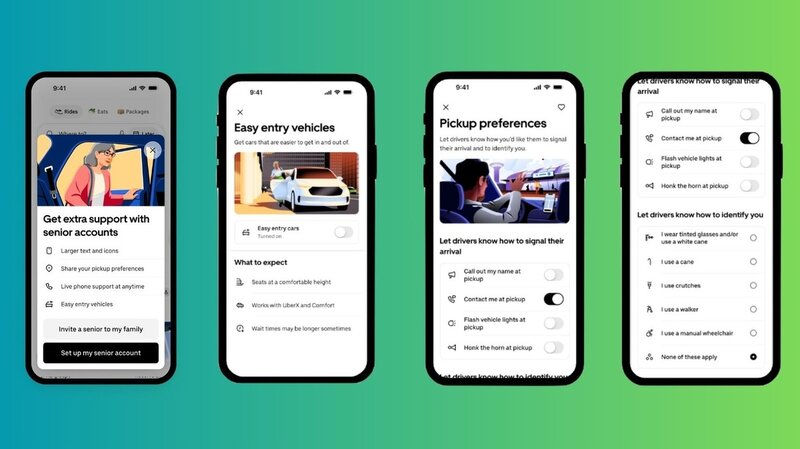
Uber expanded its senior accounts with a solo-managed option that does not require connection to a family member’s standard account. The original linked-account format remains available. Both options now include a dedicated settings page with a simplified interface and preferences for how drivers signal their arrival at pickup.
The settings page also lets riders notify drivers about mobility aids, such as a cane or walker. Separately, Uber is piloting an Easy Entry Vehicle designation for cars that do not require a high step when boarding. Any user can request the option through the Accessibility settings page. The pilot is running in nine unspecified markets.
The updates give seniors greater independence and improve communication around individual mobility needs. They reflect a wider shift toward accessibility controls within on-demand transportation, helping Uber serve more older adults and riders with limited mobility. The pilot also allows the company to evaluate demand and operational requirements before considering a wider rollout.
Image Credit: Uber
What Makes This Trend Stand Out
- Senior-first Mobility
- Age-tailored ride platforms are creating new market space through simplified account controls, independence-focused design, and mobility-aware service options.
- Accessible Ride Preferences
- Personalized accessibility settings are transforming on-demand transportation by making rider needs visible before pickup and reducing friction in driver communication.
- Low-entry Vehicle Matching
- Vehicle designation systems for easier boarding introduce differentiated service tiers for seniors, disabled riders, and anyone with limited mobility.
Sectors Adopting This
- Ride-hailing
- Accessibility-led product features are reshaping competitive advantage as platforms expand beyond convenience into inclusive transportation infrastructure.
- Senior Care
- Independent mobility tools are broadening eldercare ecosystems by supporting autonomy outside traditional caregiver-managed service models.
- Automotive Technology
- Demand for low-entry and accessibility-compatible vehicles is creating opportunities for manufacturers and mobility fleets to align vehicle design with aging populations.