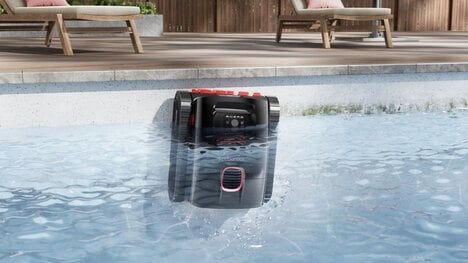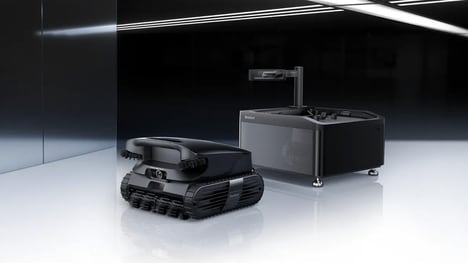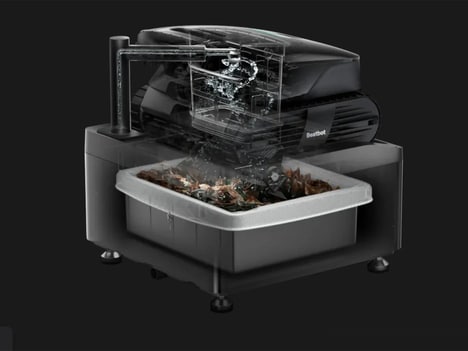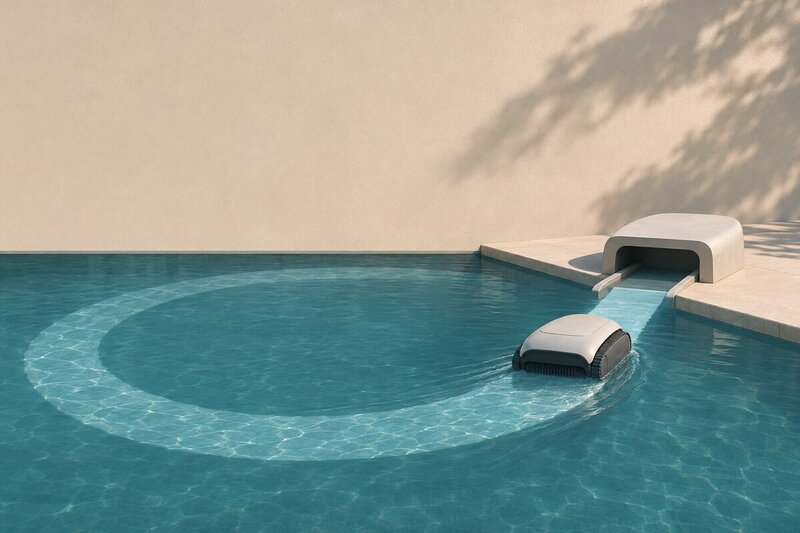
WYBOT is expanding robotic pool cleaning with the ‘M3 Pro’, described by the company as the first pool robot built to leave the water and return to its dock on its own. Shown at Piscine Global Lyon 2026 in France, it targets homeowners and commercial pool operators who otherwise have to retrieve a cleaner by hand after each cycle.
Underwater mapping and AI-based visual sensing help the M3 Pro locate the dock after cleaning, making retrieval part of the run rather than a separate task. Larger or frequently used pools get a simpler reset between cleanings, with less staff attention needed just to recover and park the robot.
WYBOT shows how autonomous water exit can make hands-free cleaning part of a pool robot’s run, with the M3 Pro on display at Booth 4A136 at Piscine Global Lyon.
Image Credit: AI-generated
What's Driving This Trend
- Self-docking Pool Robotics
- Autonomous pool cleaners that exit the water and dock independently create new potential for fully unattended maintenance cycles in residential and commercial settings.
- AI-guided Water Navigation
- Visual sensing and underwater mapping are reshaping pool equipment by enabling robots to understand aquatic environments and complete more complex tasks without human retrieval.
- Hands-free Facility Maintenance
- Labor-saving automation in routine cleaning systems signals broader demand for equipment that reduces staff touchpoints across hospitality, recreation, and property management.
Who This Affects Most
- Pool Equipment
- Robotic cleaners with self-recovery capabilities could differentiate premium pool care products by turning retrieval, storage, and charging into automated functions.
- Hospitality Operations
- Hotels and resorts may benefit from autonomous pool maintenance technologies that support cleaner amenities while reducing routine operational interruptions.
- Commercial Cleaning
- The integration of docking intelligence into specialized cleaning robots reflects a growing market for task-complete automation across hard-to-service environments.