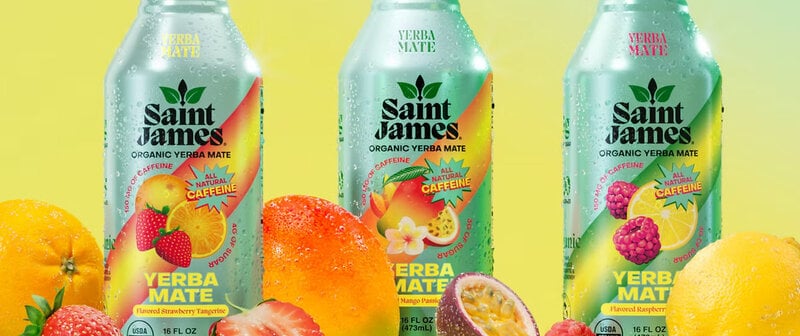
Saint James Yerba Mate marks Saint James Iced Tea's entry into the functional beverage category, introducing a higher-caffeine alternative to its existing ready-to-drink tea range. Available in Mango Passionfruit, Raspberry Lemon and Strawberry Tangerine, each 16-ounce bottle contains 150mg of natural caffeine, 20 to 25 calories and 3 to 4g of sugar. The certified organic, non-GMO beverages use yerba mate sourced from South America and contain naturally occurring polyphenols and theobromine.
The three-flavor range also introduces green and chrome packaging across recyclable, resealable aluminum bottles, giving the line a distinct visual identity within the Saint James portfolio. Saint James Yerba Mate is currently available online in 12-packs priced at $39.99, with retail distribution planned to expand through Kroger and Albertsons banners. The launch extends the brand beyond organic iced tea while targeting consumers seeking fruit-forward beverages with a higher natural caffeine content.
Part of the cluster
Ritual Refreshment
Everyday drinks are becoming low-effort tools for mood and energy
Explore the cluster

Featured Reports

The Smaller Celebration Economy

Creatine Is Leaving the Gym. The Beverage Industry Should Pay Attention.

The Catalyst Economy
What Makes This Trend Stand Out
- Organic Energy Teas
- Certified organic tea-based beverages are reshaping the energy category by combining natural caffeine, low sugar and recognizable plant ingredients for wellness-minded consumers.
- Fruit-forward Functionality
- Bright fruit flavors paired with functional ingredients create room for beverages that feel indulgent while delivering caffeine, polyphenols and other perceived performance benefits.
- Resealable Aluminum Packaging
- Distinct recyclable aluminum bottles introduce premium shelf appeal and portability advantages in ready-to-drink beverages while supporting sustainability-driven brand differentiation.
Sectors Adopting This
- Functional Beverages
- The rise of naturally caffeinated drinks signals white space for alternatives to conventional energy drinks that emphasize organic sourcing, cleaner labels and moderate calorie counts.
- Ready-to-drink Tea
- Established tea brands are expanding into adjacent functional formats as consumers seek familiar beverage bases with stronger energizing effects and contemporary flavor profiles.
- Grocery Retail
- Mainstream supermarket distribution gives emerging functional drinks broader access to shoppers looking for convenient, premium and health-positioned beverage options.