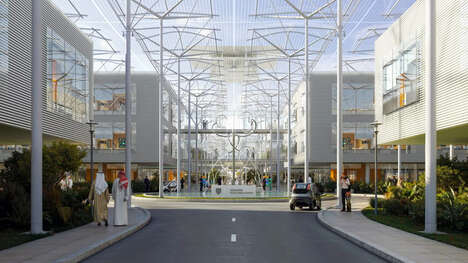
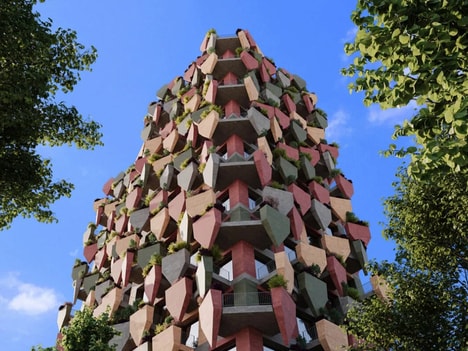
SAHMRI by Woods Bagot seems to take on a life of its own, as the structure resembles a living organism of some kind. The outside edges have a perforated texture, making the building look like a creature with an already built-in armor of self-defence.
SAHMRI stands for the South Australian Health and Medical Research Institute, a place that will house thousands of researchers coming up with innovative ways to tackle disease and various forms of sickness. According to the Contemporist, "the form’s articulated skin adapts and responds to its environment, becoming a living organism that responds to the position of the sun."
The inside area is just as stunning, consisting of spiralling staircases and open-concept rooms.
What's Driving This Trend
- Perforated Edge Architecture
- Opportunities for designing buildings that resemble living organisms and have self-defence mechanisms built-in.
- Adaptable Skins
- The use of articulated skins that respond and adapt to the environment in innovative ways, similar to a living organism.
- Spiralling Staircases and Open-concept Rooms
- A trend towards incorporating stunning design elements such as spiralling staircases in open-concept rooms for modern building design.
Who This Affects Most
- Architecture
- Opportunities in architecture to design buildings that incorporate self-defence mechanisms and innovative technologies.
- Healthcare
- Designing healthcare facilities that incorporate stunning design elements and innovative technologies that can adapt to their environment and further research and development.
- Research and Development
- Creating a space that encourages research and development in new ways of tackling disease and illness through cutting-edge facility design.