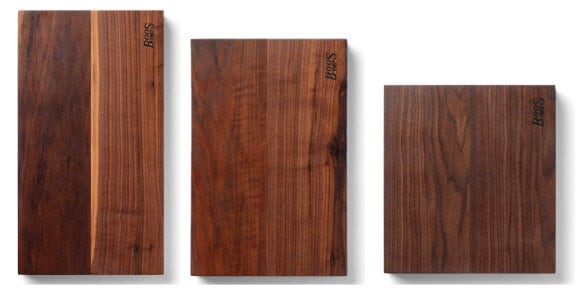
John Boos & Co. — a company recognized as America's oldest manufacturer of premium kitchen equipment — has expanded its Rustic Edge Series with a new organic cutting board. This latest design is crafted from two pieces of solid walnut joined by a single artisanal seam. The product is defined by its natural live edge that preserves the bark-side contour of the tree.
This addition to the 1887 Collection honors the company's 139-year heritage while responding to contemporary consumer demand for non-toxic, plastic-free culinary tools. Each cutting board in the Rustic Edge Series is 100% handcrafted in the United States and exhibits unique wood grains that ensure no two pieces are identical.
The Rustic Edge Series by John Boos & Co. boasts live edge cutting boards available in three sizes.
Image Credit: John Boos & Co.
What Makes This Trend Stand Out
- Live-edge Kitchenware
- Natural contours and visible wood grain elevate everyday prep tools into distinctive home objects, creating space for premium products that merge utility with decor.
- Plastic-free Culinary Tools
- Growing concern over toxins and microplastics is reshaping kitchen purchasing around durable, non-toxic materials that can replace synthetic staples.
- Heritage Craft Branding
- Longstanding manufacturing legacies can differentiate modern product launches by pairing provenance, handcraftsmanship, and contemporary sustainability expectations.
Sectors Adopting This
- Kitchenware
- Premium preparation tools are being redefined by artisanal materials and individualized finishes that support higher-margin alternatives to mass-produced goods.
- Home Goods
- Rustic, one-of-a-kind design cues are strengthening the overlap between functional household products and decorative lifestyle pieces.
- Sustainable Consumer Products
- Demand for plastic-free, domestically made goods is expanding opportunities for brands that position natural materials as safer and longer-lasting choices.