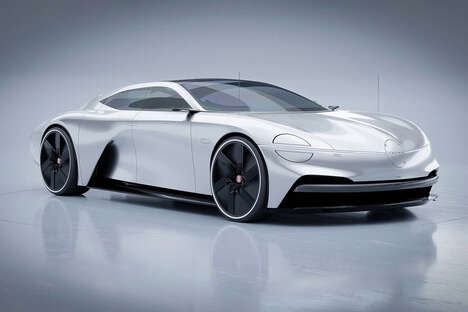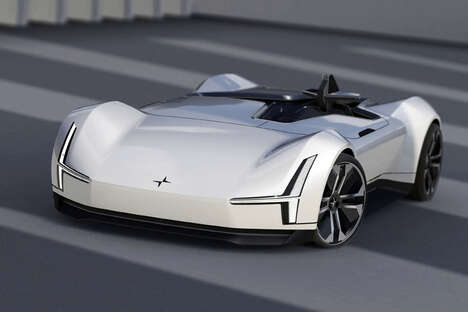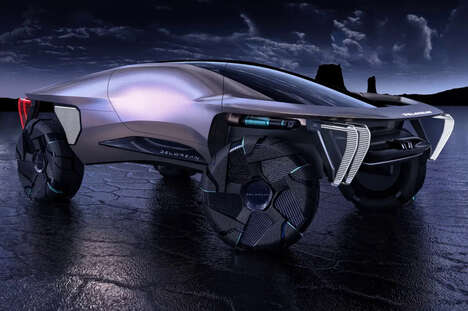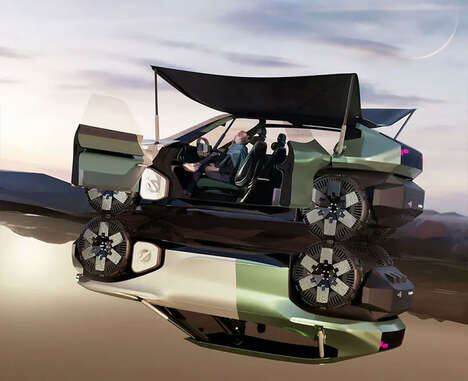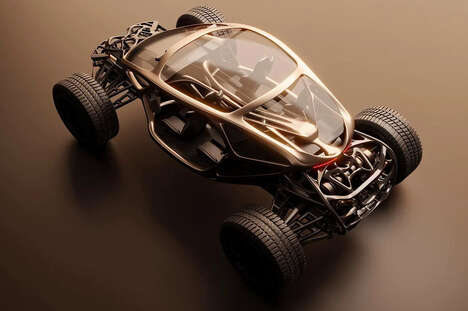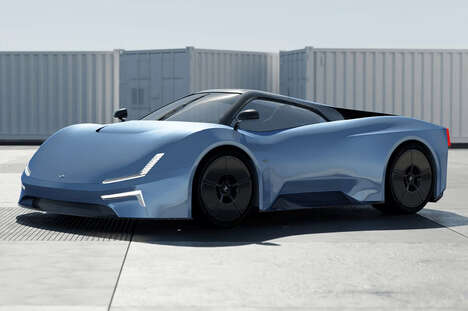
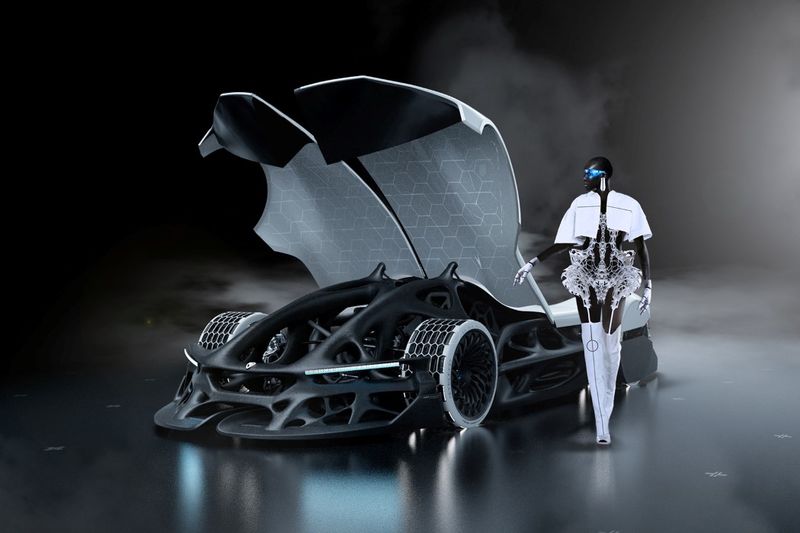
The conceptual Rimac 'Scalatan' has been designed by Maximilian Schneider as a vehicle for the year 2080 that delivers a different kind of driver experience and utilizes an unexpected energy source.
The vehicle boasts an aerodynamic design that incorporates a 3D-carboprinted titanium graphite chassis that stores the car's lithium-oxygen battery packs. These batteries will react with the oxygen that passed through the chassis to transform it into energy and act like a living creature on the roadways.
The conceptual Rimac 'Scalatan' is finished with airless wheels that are also 3D-printed and feature a distinct lattice design that will absorb shocks like air-filled wheels, while offering enhanced resistance to wear and offering a completely puncture-proof design to boot.
Key Themes Behind This Trend
- Lithium-oxygen Battery Technology
- Developing new lithium-oxygen battery technology that utilizes oxygen to transform into energy provides opportunities for creating more efficient vehicles in the future.
- 3d-carboprinting
- Incorporating 3D-carboprinted titanium graphite chassis and airless wheels provides opportunities for manufacturing lighter and more durable vehicles in the future.
- Aerodynamic Vehicle Design
- Advancing aerodynamic vehicle design and using it as an integral part of energy transformation technology can lead to more energy-efficient vehicles in the future.
Where This Applies
- Automotive Manufacturing
- Incorporating new energy sources and enhancing the manufacturing process with 3D-printing technology could disrupt the automotive manufacturing industry in the future.
- Battery Technology
- Developing lithium-oxygen battery technology and creating new energy conversion methods can disrupt the battery technology industry in the future.
- Industrial Design
- Advancing industrial design practices and incorporating new materials and technologies can disrupt the industry in the future, leading to more innovative and sustainable products.