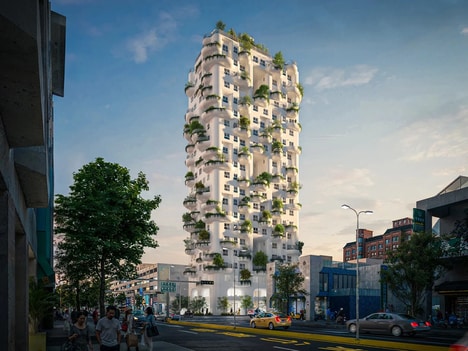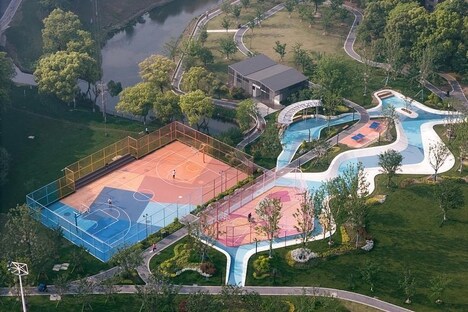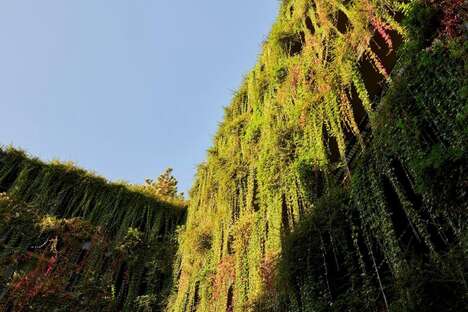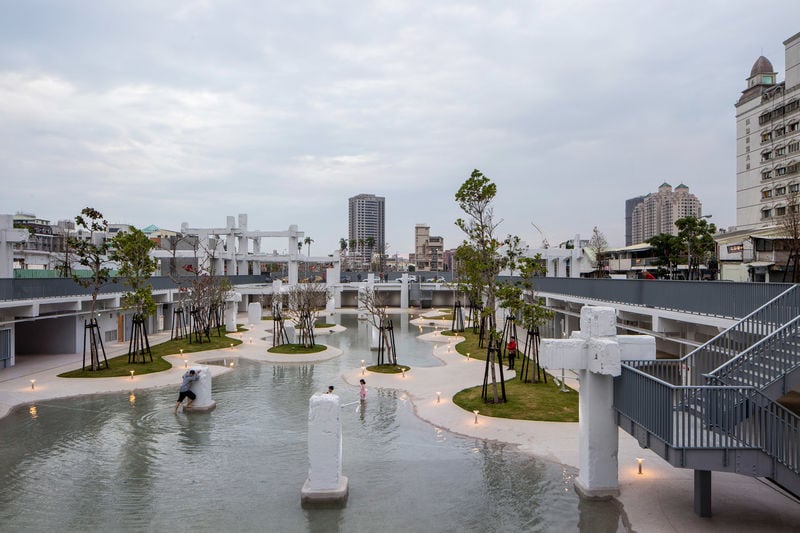
Many cities have begun to emphasize and support various rejuvenation projects that will deliver ecological relief and greener public spaces to the urban environment. This effort in southern Taiwan is a great example of this.
Tainan Spring is a contemporary rejuvenation project that is overseen by MVRDV. It takes the place of a vacant China-Town Mall and is described as a "lush lagoon" by the firm. A sunken park and a public pool are among the features that will ensure a plentitude of public access and revitalizing possibilities for the neighborhood. While the vegetation is expected to "develop into a lush jungle" over the course of the years, the rejuvenation project maintains some industrial features as MVRDV preserves the remains of the shopping mall itself.
Image Credit: Daria Scagliola
Key Themes Behind This Trend
- Urban Rejuvenation Projects
- Opportunity for creating greener public spaces and ecological relief in cities.
- Contemporary Rejuvenation
- Potential for transforming vacant spaces into vibrant and accessible areas.
- Preserving Industrial Features
- Opportunity to incorporate historic elements into modern rejuvenation projects.
Where This Applies
- Architecture
- Architects and designers can explore innovative strategies for urban rejuvenation.
- Real Estate
- Real estate developers can capitalize on the demand for revitalized urban spaces.
- Landscaping
- Landscape designers can contribute to the creation of greener public spaces.