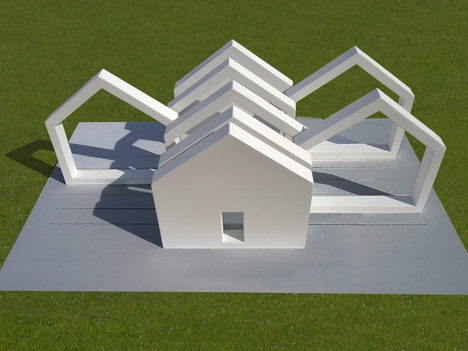
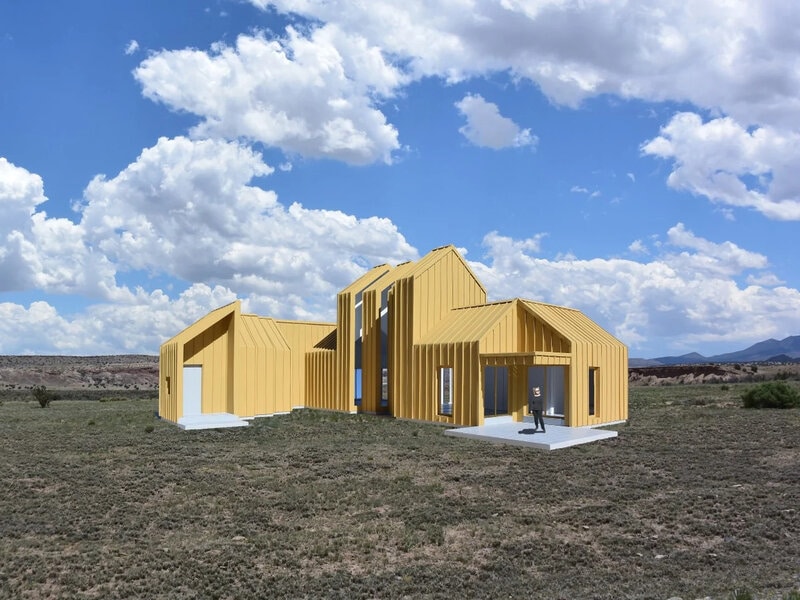
Michael Jantzen's Segmented Building System concept recasts a house as a set of 4-foot-wide slices, giving homeowners a way to pull a structure apart and assemble it again when their layout or location changes. Each slice joins floor, wall, and roof elements into one repeatable section made from structural insulated foam panels.
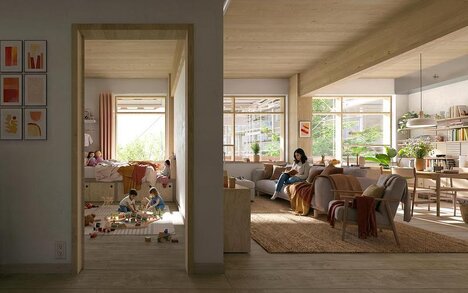
Full and half profiles let the plan lengthen or branch, while shifting adjacent sections slightly creates narrow glass joints that bring daylight through the walls and into the roof. The segments still need a prefabricated concrete perimeter foundation, so moving them means preparing a new base and reconnecting building services.
The reusable sections turn housing flexibility into something more substantial than movable furniture, because the usable parts of the home stay intact instead of becoming demolition waste. That focus moves modular housing toward long-term reconfiguration, not just faster one-time assembly.
Image Credit: Michael Jantzen
Why This Trend Is Growing
- Reconfigurable Housing
- Homes built from repeatable structural sections suggest new models for long-term layout adaptation without full demolition or costly rebuilding.
- Reusable Building Modules
- Prefabricated slices that preserve floors, walls, and roofs create value by keeping core housing components in circulation across multiple configurations.
- Adaptive Daylight Design
- Shifted modular joints that introduce glass openings highlight how flexible architecture can combine spatial customization with passive light benefits.
Industries Being Reshaped
- Modular Construction
- Segmented building systems broaden modular construction beyond rapid assembly by supporting future expansion, relocation, and redesign.
- Residential Real Estate
- Flexible home structures introduce differentiated property formats where living spaces can evolve with household size, lifestyle changes, or site moves.
- Sustainable Building Materials
- Structural insulated panels used in reusable sections point to lower-waste construction pathways that reduce dependence on disposable building assemblies.