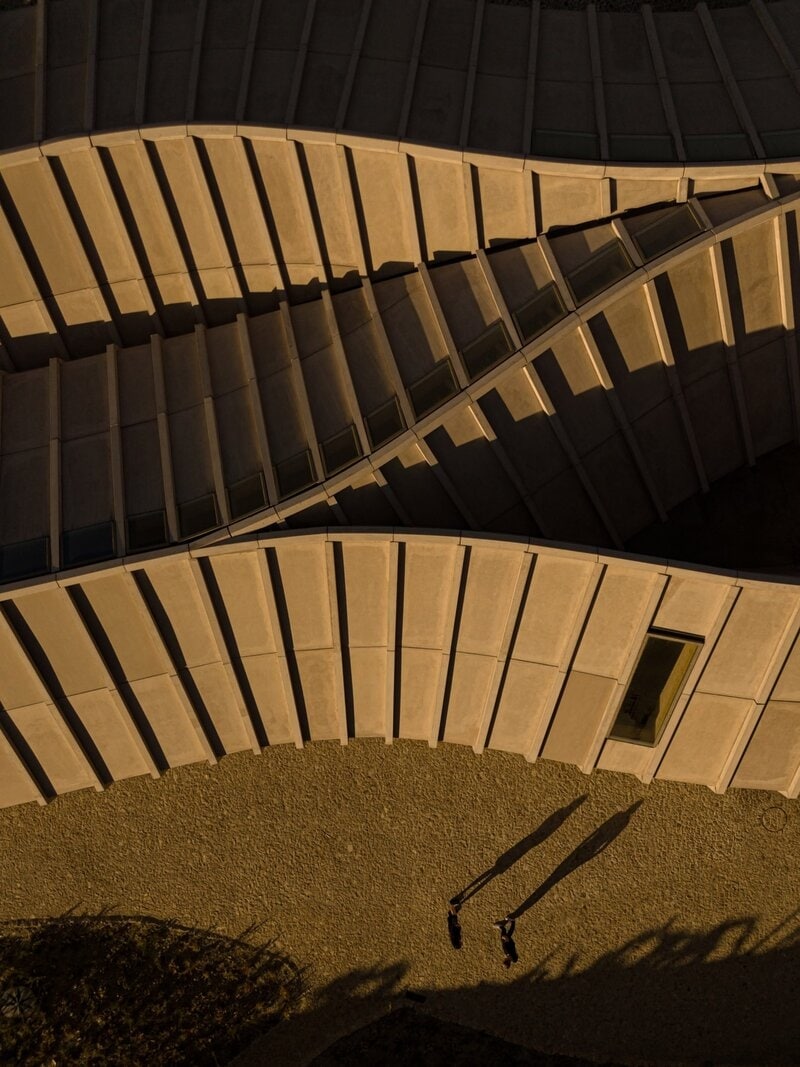
The Quinta de Adorigo Winery by Atelier Sérgio Rebelo sits within Portugal’s Douro Valley, shaped by the contours of the surrounding vineyard terraces. The stepped layout follows the slope of the land, embedding production zones, tasting rooms, and visitor areas within a single flowing structure. Materials such as local stone, timber, and copper were chosen for their longevity and ability to age gracefully, allowing the building to merge visually with its environment.
Visitors experience the space as a gradual journey through the winemaking process, moving naturally from entry to cellar to terrace. Light filters through skylights and broad glass panels, emphasizing the link between structure and landscape. The design unites technical efficiency with craftsmanship and spatial calm. As a result, the winery embodies the spirit of Douro viticulture while presenting a contemporary approach grounded in sustainability and respect for place.
Image Credit: Fernando Guerra
Why This Trend Is Growing
- Sustainable Architecture Integration
- Architectural designs that harmonize with natural landscapes present significant opportunities for innovative construction methods focused on sustainability and environmental preservation.
- Experiential Journey Spaces
- Creating spaces that guide visitors through seamless experiential journeys offers a chance to innovate in how environments engage users and tell brand stories.
- Material Longevity and Aesthetics
- The use of materials that enhance both longevity and natural aesthetic appeal opens up innovation in sustainable building materials that age gracefully.
Industries Being Reshaped
- Winery Architecture
- Purpose-built winery designs that integrate function and aesthetics could reshape how the wine industry approaches facility development.
- Sustainable Building Materials
- The demand for durable, environmentally-integrative materials presents a burgeoning opportunity within the sustainable building materials industry.
- Tourism and Hospitality Design
- Integrating visitor experience deeply into architectural design has the potential to revolutionize the tourism and hospitality sectors by offering unique visitor pathways and interactions.