
Researchers think that spinal nerves damaged by spinal cord injuries may be able to regenerate with PTEN-deletion treatment.
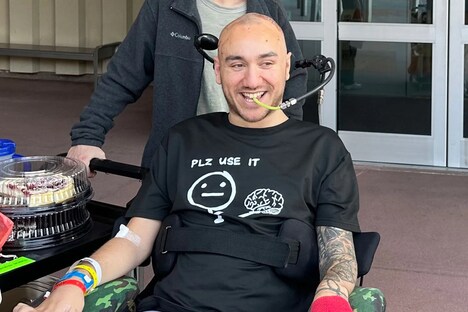
By removing an enzyme called PTEN from a molecular pathway that regulates cell growth, researchers have been able to regenerate nerve connections in mice with spinal injury. The PTEN-deletion treatment holds the promise of a cure for about six million US residents paralyzed by spinal cord injury.
Implications - Steward, who is an anatomy and neurobiology professor and director of the Reeve-Irvine Research Center at UCI, says that "paralysis and loss of function from spinal cord injury has been considered untreatable, but our discovery points the way toward a potential therapy to induce regeneration of nerve connections following spinal cord injury in people.â€
What's Driving This Trend
- Regenerative Medicine
- Developing PTEN-deletion treatment to regenerate nerve connections in spinal cord injuries.
- Neurobiology
- Exploring the molecular pathways that regulate cell growth and nerve regeneration.
- Spinal Cord Injury Treatment
- Unlocking potential therapies to induce nerve connections following spinal cord injuries in humans.
Who This Affects Most
- Biotechnology
- Applying PTEN-deletion treatment in the field of regenerative medicine.
- Pharmaceuticals
- Developing drugs that target PTEN for nerve regeneration in spinal cord injury treatments.
- Neuroscience
- Advancing knowledge of neurobiology and nerve regeneration for potential therapies in spinal cord injury treatments.