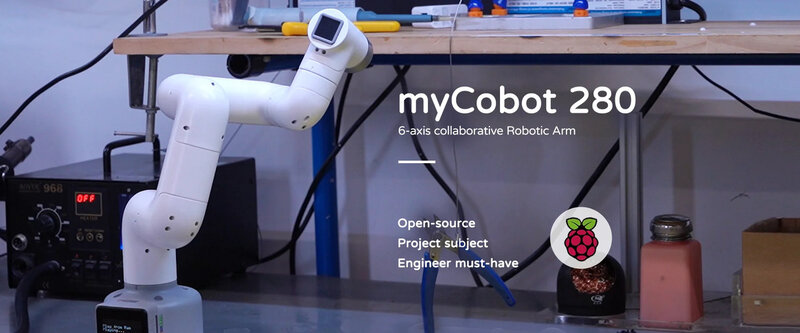
The ‘myCobot 280’ gives Arduino builders a six-axis robot arm that also supports Python development alongside ‘Arduino App Lab.’ The setup lets users program movement through more than one workflow while keeping the hardware centered on the ‘Arduino UNO Q.’
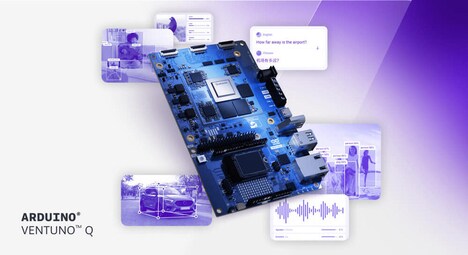
Inside, a Qualcomm Dragonwing system carries 4 GB of RAM and 32 GB of storage, while onboard kinematics handle angle and coordinate control. It also works with ROS, the Robot Operating System, and fits LEGO builds for mixed hardware projects. Add-ons and wired or wireless connections allow the arm to be mounted on a mobile platform and linked with other equipment.
Python support on an Arduino-based arm widens the kinds of projects a single machine can cover, from app-led control to script-driven robot work. The mobile-platform option also moves small robot arms closer to light automation roles instead of keeping them tied to one spot.
Image Credit: myCobot
Why This Trend Is Growing
- Multi-workflow Robotics
- Desktop robot arms that support app, Python, Arduino and ROS workflows create flexible entry points for prototyping, education and small-scale automation.
- Mobile Desktop Automation
- Compact robotic arms mounted on mobile platforms signal a shift from stationary maker tools toward adaptable light-duty automation systems.
- Modular Maker Robotics
- LEGO compatibility, add-ons and mixed hardware support expand the role of programmable robot arms as customizable platforms for experimentation.
Industries Being Reshaped
- Educational Technology
- Programmable robotics kits with multiple coding environments strengthen hands-on STEM learning while bridging beginner and advanced development pathways.
- Industrial Automation
- Small six-axis robot arms with wireless connectivity and mobile mounting potential introduce lower-cost options for flexible micro-automation tasks.
- Consumer Robotics
- Accessible robotic arms backed by app control and scripting tools broaden the market for personal robotics beyond hobbyist assembly into practical home and workshop use.